What is Tamkeen?
Tamkeen (empowerment) is a training program designed and implemented by the Cairo Institute for Human Rights Studies (CIHRS) to provide participants, including leaders of rights organizations and groups, and individuals interested in promoting a culture of human rights from across the Arab region, with the opportunity to critically engage in reflection and analysis of contemporary human rights issues in the region. The program presents alternative theoretical and applied counternarratives that challenge political, ideological, cultural, economic, historical and societal legacies, interpretations, and considerations used to justify the abandonment of human rights values and principles. It further seeks to monitor the transformations affecting these interpretations and considerations, enabling participants to develop a more systematic and profound understanding of the challenges posed amid rapidly changing regional and international contexts.
- Challenging traditional legacies and interpretations: By offering alternative theoretical and applied narratives, Tamkeen seeks to confront and analyze human rights issues with a fresh and courageous perspective.
- In-depth analysis: Examining political, ideological, cultural, economic, historical and societal conditions used to obstruct the consolidation of human rights values and principles.
- Providing innovative solutions:Developing effective strategies to defend and promote human rights amid current challenges and rapidly changing regional and international dynamics.
Tamkeen Program- 2026
Following the success of the Tamkeen program’s previous learning journeys, which benefited over forty participants, the Cairo Institute for Human Rights Studies (CIHRS) announces the opening of applications for its next journey: ‘Tamkeen - Towards Critical Perspectives on Human Rights’. This training program is designed for leaders of human rights organizations and groups, program managers, and researchers from countries throughout the Arab region.
During the previous editions, participants embarked on a learning journey to understand and deconstruct the concepts undergirding authoritarian regimes in the region through a series of in-depth lectures delivered by leading and expert academics and jurists, including Dr. Khaled Fahmy, Dr. Dina Wahba, Dr. Ezzedine Choukri Fishere, Dr. Hind Ahmed Zaki, Professor Kenneth Roth, Professor Steven Heydemann, Dr. Sultan Alamer, and Mr. Zied Krichen.
In addition to the lectures, participants were required to study and discuss several research papers and contributions from academics and lecturers representing different orientations, and participate in other activities aimed at enriching their research and analytical proficiency. The program further included training workshops and working groups, both online and in person, in Marseille. Through direct consultation, specialists followed up with participants throughout their learning journey.
Participant Feedback from Previous Sessions
In the Tamkeen program, I enriched my perspective by deconstructing and challenging dominant concepts and inherited narratives through critical thinking.
The program was an opportunity to network with people from different countries, and a chance to receive diverse, high-quality trainings.
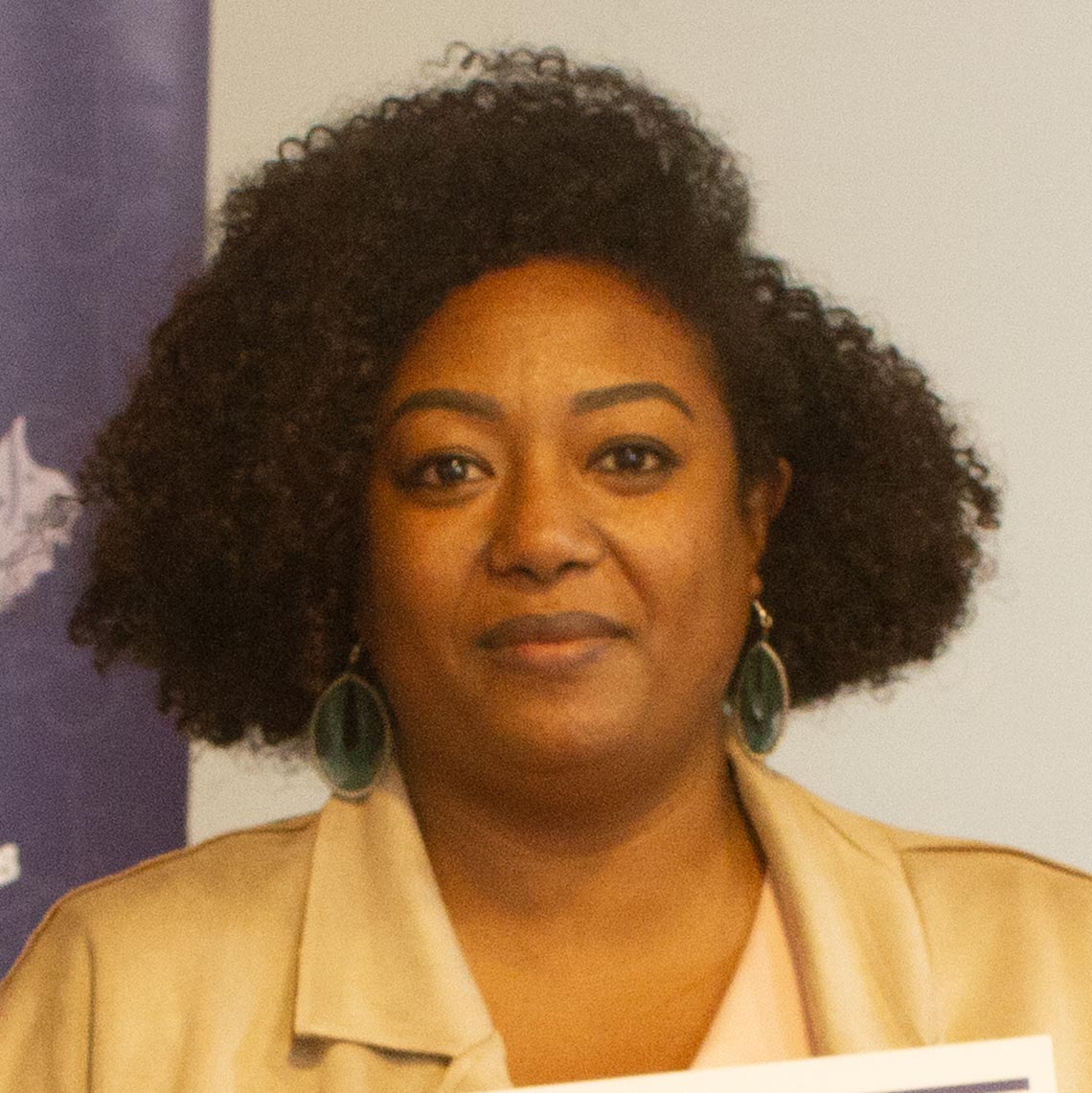
I can say one of the most important things I gained from participating in the Tamkeen program is the different readings of the human rights reality. A large space was provided for exchanging information and experiences, and gaining analytical expertise through exposure to the diverse experiences of the human rights reality specific to each of the participants’ countries.
Winnie Omar, participant in 2023 Tamkeen Program: Sudanese feminist writer and activist. She earned a master’s degree in human rights and a bachelor’s degree in sociology and anthropology (after a discouraging experience with engineering). She has been working in Sudanese civil society for ten years, with a focus on women and girls’ protection, social justice, and feminist knowledge production. She has contributed to numerous books on youth activism in Sudan, the state and women’s bodily autonomy, and rethinking heritage from an aesthetic epistemological perspective. She is now working as a researcher on issues of state and structural violence.
Philosophy of Tamkeen
The philosophy behind this session of the training program is based on two main axes:
- Global and regional challenges to democracy:In this axis, we focus on understanding the multiple dynamics contributing to the decline of democracy globally, including the crisis of the global order facing the nation-state, the rise of the extreme right, the global economic crisis, conflicts and wars, and conflicts of interest in counter-terrorism, security cooperation, and migration policy. It further reviews the impact of these challenges on the defense of human rights. At the regional level, power relations in the Arab region are analyzed, including the challenges facing democratization and reasons for the failure of the Arab revolutions. Further discussion is centered on the human rights impact of regional rivalry; Gulf state policies; conflicts over resources and wealth; ideological, political, and religious conflicts; and civil wars.
- Society in the Arab Region:This axis focuses on examining the impact of the prevailing political, religious, and societal culture on human rights and on various components of civil society (parties, human rights organizations, feminist organizations, and trade unions), specifically in regards to how cultural factors serve to justify the abandonment of human rights. It further addresses the issue of citizenship and the impact of cultural and religious diversity, the relationship between the individual and the state, and gender on human rights in the Arab region.
This axis will further address the impact of historical narratives on collective consciousness, and how authoritarian regimes seek to dominate the public’s memory by controlling documents, archives and references, knowledge outlets, and media platforms. In a post-truth era, when subjective feelings and beliefs trump objective facts, we explore how people engage with alternative narratives as acts of resistance.
Program Objectives
- Strengthening the analytical and critical capacities of participants and encouraging them to deconstruct existing cultural and societal narratives impeding the advancement of human rights as a priority over other considerations.
- Developing a semi-academic training experience based on the adoption of advanced approaches in political, social, and economic sciences that support critical thinking and contextual analysis to understand the roots of political, religious and societal cultural issues and the complexities of patriarchal beliefs that hinder human rights progress in the Arab region.
- Enabling participants to build a coherent discourse and develop new cultural approaches that challenge current structural issues and providing participants with opportunities to adopt and disseminate unique and innovative proposals and visions that champion human rights and challenge inherited narratives.
Program methodology
In a ten-month participatory learning journey, conducted both online and in person in Marseille, France, which begins with the unity of human rights concepts and a detailed reading into the philosophy of international human rights standards, the Tamkeen training program seeks to encourage research and deep reflection on the intersections and dynamics of influence and impact between the program’s axes and their implications for the task of defending human rights as a priority. Through critical thinking and analysis, the program encourages participants to put forward different visions and interpretations of the meaning of dominant culture in Arab societies. Participants will present alternative intellectual theories to confront this inherited culture, with the aim of enhancing the protection of human rights values in the region, amid a deep understanding of regional and international realities.
Eighteen participants from across the Arab region, including heads of organizations and activists interested in promoting a culture of human rights, will engage with distinguished academics, researchers, and experts in a series of in-depth lectures and discussions (20 lectures), starting in January 2026 and extending for ten months. In parallel, participants will study several in-depth research papers and contributions from academics and lecturers representing different perspectives, engage in collective discussions about these papers through various online platforms, and put forward alternative and counter visions. The program further includes an invitation to attend a six-day training workshop in Marseille, France.
Conditions for passing the program
In order for participants to successfully complete the training program, they are expected to:
- Actively participate in all program activities, including lectures, group meetings, and training sessions.
- Fully implement the tasks assigned to them during the program period and adhere to the time frame allocated to the tasks.
- Consistently and thoughtfully communicate and interact in group discussions, and with the program coordinators through various platforms.
Participants
In this edition of the Tamkeen program, we are searching for 18 participants, who are:
- Members (by appointment or otherwise) of a local, regional or international human rights organization/institution/group/initiative.
- Researchers – Program Directors – Project Managers – Leaders, primarily involved in setting strategies, assessing situations, studying contexts and challenges, and analyzing issues, with a direct role in these processes within their organizations or human rights groups.
- Independent individuals interested in promoting a culture of human rights. From 25 to 40 years old.
- Proficient in research writing in Arabic.
- Nationals of: Morocco, Algeria, Tunisia, Libya, Egypt, Sudan, Palestine, Syria, Lebanon, Iraq, and Jordan (Residency is not required).
CIHRS responsibilities to program participants
- Assumption of financial costs: CIHRS is committed to covering all training, travel, and accommodation costs for participants during the training workshops organized by the program, to ensure that they do not incur any additional financial burdens.
- Technical support: CIHRS provides all necessary technical means and technical support to participants to facilitate their interaction with e-learning platforms and effective participation in online lectures and meetings, with the aim of enabling participants to make the most of all aspects of the program.
- Protecting privacy and information security: CIHRS is committed to respecting the privacy and protecting the personal information of participants. CIHRS is committed to applying the highest standards of digital security to ensure safe communication between all parties.
- Equality and non-discrimination: CIHRS is committed to ensuring the principle of full equality for all participants at all stages of the program, from selection to implementation. Any form of discrimination or lack of appreciation based on gender, race, belief, nationality, or sexual orientation is unacceptable and will be dealt with firmly.
Application process
Please answer all questions as thoroughly as possible and within the space allowed on the form. Only completed forms submitted by the specified deadline will be considered; incomplete applications or those submitted after the indicated date will not be considered.
CIHRS’ Tamkeen program team will only contact shortlisted applicants to schedule in-person (online) interviews in preparation for the selection of the final list of participants.
During the interview, shortlisted participants may be asked to submit documents, such as letters of recommendation, certificates of experience, previous publications, business models, and other documentation.
Sponsored by