
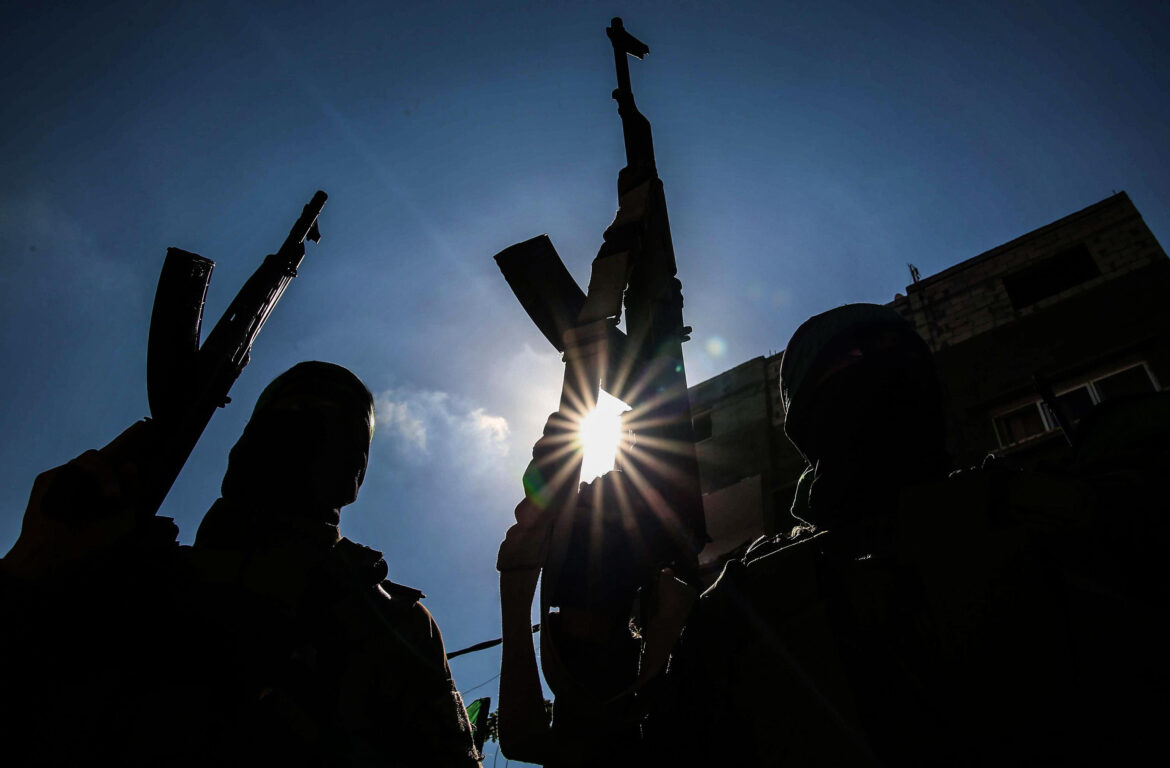
In Libya, judicial personnel are regularly targeted by assassination, kidnapping, arbitrary detainment, and armed attacks; this alarming phenomenon has been the backdrop against which Libya’s judiciary has operated since 2012 until now. Investigations into these violations are often stalled or never initiated, entrenching impunity and sowing instability under a critically undermined and fragmented legal landscape. This is the starting point of a new report released by the Cairo Institute for Human Rights Studies (CIHRS): When Force Becomes Law: Armed Groups and Judicial Breakdown in Libya.
The progressive takeover by armed groups of key stages in the justice process is documented by the report, from arrest and investigation to detention, trial, and enforcement of court decisions. For over fifteen years after the upending of Gaddafi’s authoritarian rule, the Libyan judiciary has operated in a climate of insecurity and fragmentation, and systematic interference.
“Libya's judiciary has not simply been weakened; it has been systematically and consistently subordinated to armed or political power. Until judicial authority is decoupled from armed group control, no justice process - domestic or international - can produce durable results,”
Ziad Abdeltawab, Director of the Cairo Institute for Human Rights Studies
CIHRS interviewed judges, lawyers, prosecutors, victims, and legal experts, and analysed judicial rulings and official documents. It found that armed groups frequently oversee or control arrests, detention facilities, or evidence collection. Prosecutors can seldom access detainees or verify confessions obtained under coercion. Courts themselves have been targeted. Judges recuse themselves from sensitive cases under threat, hearings are disrupted at gunpoint, and courthouses are stormed. In July 2025, armed men in three vehicles surrounded the Abu Salim Personal Status Court in Tripoli. They opened fire and forced proceedings to a halt. Such an incident is not exceptional but fits within a consistent pattern of attacks spanning about a decade and a half across the entire country.
Attacks and other persistent violations against the judiciary occur in the context of a nation fractured between two rival authorities. In the east, Khalifa Haftar dominates militarily and economically across Cyrenaica and Fezzan. In the west, the UN-backed Government of National Unity, led by Abdulhamid Dbeibeh, enjoys political recognition but lacks a monopoly on force, leading to ongoing fragmentation, sporadic fighting, and the persistence of parallel institutions. Dozens of armed groups have embedded themselves within state structures, either formally or informally linked to the ministries of defence, interior, and justice. Entrusted with key law enforcement tasks such as arrest, detention, and prisoner transfer, these groups frequently exploit their state-granted authority for coercion and political patronage, acting without legal oversight. Drawn into this splintered system, the judiciary’s authority is largely dependent on whichever armed group controls the area.
The report concludes that Libya's political fragmentation has produced overlapping and competing systems in which judicial decisions are not the outcome of legal procedures but are instead dependent upon the balance of power between armed actors and their political sponsors and financial funders. Courts and prosecutors formally tasked with enforcing the law lack control over the mechanisms that make justice possible, such as custody of detainees, execution of arrest warrants, and protection of judicial personnel.
The report further highlights how international policies have reinforced this troubling dynamic. Cooperation with Libyan authorities on migration control and security has empowered armed actors without ensuring accountability to judicial institutions. The release of former head of the Judicial Police and ICC-indicted Osama Elmasry (also known as Almasri Njeem) by Italy and his return to Libya directly undermined both international justice mechanisms and Libyan judicial credibility. By contrast, Germany's December 2025 surrender of Khaled Mohamed Ali El Hishri, a leader in the Special Deterrence Force, to the ICC demonstrates that enforcement is possible when political will exists.
To address these structural challenges, CIHRS calls on Libyan authorities to dismantle parallel detention systems operated by armed groups, restructure and adequately resource the Judicial Police and prioritise the prosecution of attacks on judicial personnel. To reduce armed group involvement in law enforcement, CIHRS further calls on the European Union and the United Nations to condition cooperation with Libyan security institutions on concrete and verifiable steps.
The urgency of these calls has been underscored by recent events. Following the May 2025 assassination of Stability Support Apparatus (SSA) leader Ghnewa, more than 80 bodies were discovered at SSA-run detention sites in Tripoli. The UN human rights chief Volker Türk then reacted: “Our worst held fears are being confirmed: dozens of bodies have been discovered at these sites, along with the discovery of suspected instruments of torture and abuse, and potential evidence of extrajudicial killings.”
The GNU has since established investigative committees and taken initial steps to assert control over armed group-run detention facilities. Combined with the GNU's subsequent acceptance of ICC jurisdiction through 2027, these represent necessary moves. Nevertheless, CIHRS warns they remain insufficient without a structural shift: selective confrontation of armed groups cannot substitute for systematic judicial accountability. Without comprehensive efforts to reassert the authority of courts and prosecutors over the justice process, the current opportunity will be lost and attempts to consolidate the rule of law will remain fragile and incomplete, as they have for over fifteen years.
«When Force Becomes Law»
Armed Groups and Judicial Breakdown in Libya
Executive Summary
«If the prosecutor wants you detained but Radaa does not, you will not be detained. If Radaa wants you detained, you will be detained. There is no authority above Radaa.»
M.A.S. ، a victim of arbitrary detention at the hands of Radaa.
Libya's judiciary is undermined by political fragmentation that has produced multiple legal orders, wherein armed groups hold substantial influence over the justice system and are enabled to intervene extensively within it, as demonstrated by this report. As a result, judicial actors operate within a milieu defined by insecurity, institutional chaos, and political interference.
Armed-group dominance and territorial--political fragmentation is conceptualised by the report as mutually reinforcing dynamics. The lack of territorial unity multiplies the centres of authority where each relies on armed actors for enforcement. The continued empowerment and impunity of armed groups strengthens territorial and political divisions, preventing the emergence of unified legal, institutional, and accountability bases. Fragmentation and armed group dominance is a self-sustaining cycle rather than constitutive of sequential problems.
Within the overarching conundrum that has become Libya's political landscape, the judiciary holds a subordinate position. Although courts and prosecutors are formally tasked with enforcing legality, they lack effective control over what would render law enforceable: physical security, custody of detainees, execution of orders, and protection of personnel. Judicial authority has become contingent on local power balances, territorial control, and the acquiescence of armed actors. This subordination manifests not only through direct interference, but also through institutional distortions, such as jurisdictional volatility and fragmentation of legal norms.
Drawing on interviews with judicial stakeholders, victims, and an analysis of judgments, executive orders and other secondary documentation, the report shows how armed groups' coercive power and the fragmented political situation has consistently overridden legal authority, reshaping the justice process from arrest to enforcement.
Libya's patchwork of armed groups
For over a decade, Libya has been divided around two competing centres of power. In the east, Khalifa Haftar wields military and economic dominance. A former army officer under Gaddafi, Haftar centralised coercive order across the Cyrenaica (east) and Fezzan (south). In the west, the United Nations-recognised Government of National Unity (GNU), currently headed by Abdulhamid Dbeibeh, has enjoyed political legitimacy without monopoly of violence, resulting in persistent fragmentation, episodic armed clashes, and the survival of parallel institutions. Neither have achieved either full territorial control or comprehensive international recognition.
Libya's security landscape is characterised by the presence of dozens of armed groups with a multiplicity of origins, functions, and legal status. Some emerged during the 2011 uprising against the Gaddafi regime as local self-defence or revolutionary formations, while others were created or consolidated during the subsequent transitional period in response to persistent insecurity and political fragmentation. Over time, they have functioned concurrently as armed formations exercising de facto territorial control and as actors formally or informally embedded within state institutions. Several have been officially affiliated with, or integrated into, the ministries of defence, interior, or justice, and have been delegated core law-enforcement functions, including arrest, detention, facility management, court protection, and prisoner transfers.
This hybridisation is particularly visible in the domain of migration control. Armed groups such as the Special Deterrence Force (Radaa) in Tripoli, the Stability Support Apparatus (SSA), and units affiliated with the Libyan National Army (LNA) in eastern Libya have played central roles in arresting migrants, managing detention facilities, and conducting interception or transfer operations, often in cooperation with state authorities and international partners. While framed as security or border-management measures, these arrangements have reinforced the coercive power of armed groups operating with limited judicial oversight. The intricate imbrication between armed groups and the state apparatus makes it difficult to disentangle security governance from judicial authority, complicating efforts to restore the judiciary's effective control over the judicial process.
Armed groups' interference in the judicial system
Judicial actors face threats, abductions, physical assaults, and fatal attacks. Even where motives remain unproven, these incidents generate a profound chilling effect. Prosecutors and judges in both east and west report that judicial outcomes are influenced by the risks to which they may be exposed. They think twice before issuing release orders, accepting or pursuing sensitive cases, or challenging powerful actors. Compounding their insecurity is the deflection of the Judicial Police from their core mission: to guarantee the safety of judicial staff as well as detainees. Instead, the Judicial Police have acted as a semi-autonomous armed group.
Concretely, armed groups act as de facto gatekeepers of the judicial process. Citizens, residents and migrants are often detained outside the procedural legal framework, and interrogated in armed group or security-agency facilities. Only when it is politically convenient are such illegally detained persons transferred to judicial custody. Nevertheless, once in judicial custody they continue to be subject to armed group influence. Courts relied on interrogation videos produced by armed groups in some documented cases, showing how evidence could be generated under coercion and outside judicial oversight. Due process is undermined even further by armed groups' attacks on courthouses and interference in hearings, and their arbitrary application of judicial decisions.
Armed groups and politically influential individuals routinely evade arrest warrants, ignore judicial orders, or secure release through unofficial channels. Some detainees remain imprisoned despite court rulings ordering their release; others avoid detention altogether through negotiated arrangements or protection by armed actors. High-profile cases, including those involving alleged war crimes, disappearances, or corruption, underscore how legal outcomes depend heavily on a person's military, political, or financial capital.
This reality has crippled Libya's judiciary while exacerbating its fragmentation. As the country is politically and territorially divided, so too have judicial institutions been pulled into competing power structures. Armed groups control territory and act as the force behind rival political authorities, and courts in each area tend to follow the same lines of control. As a result, law, jurisdiction, and judicial governance in Libya increasingly reflect geography and armed power rather than a unified national legal order.
This fragmentation is also clear in Libya's ongoing constitutional dispute. Instead of one clear constitutional authority being recognised by everyone, each attempt to settle the issue has triggered political resistance and further division. Over time, constitutional questions stopped being handled mainly through the courts and became part of a broader political struggle. Since 2022, two rival bodies have emerged, each claiming the right to issue final constitutional rulings.
Current national and international dynamics
This report is published at a moment when Libya's judiciary is undergoing a profound shift. No longer a peripheral casualty of conflict, the judiciary has become a central arena in Libya's ongoing struggles over legitimate violence, judicial accountability, and state authority. The assassination on 12 May 2025 of Abdelghani al-Kikli (known as Ghnewa), head of the Stability Support Apparatus (SSA) under the 444th Brigade, incited armed clashes across Tripoli. It exposed the extent to which coercive power in Libya continues to reign through armed groups embedded within nominal state structures. Crucially, the assassination's aftermath placed the judiciary itself at the centre of the political response: starkly reflecting how the realities of armed group power collided with the judicial process.
In the days that followed, the Attorney General and Prime Minister Abdulhamid Dbeibeh publicly reaffirmed the judiciary's constitutional role and the need to restore state authority over "irregular groups." This rhetoric, however, sits uneasily alongside governance practices that continue to rely on selected armed actors for security provision and enforcement. CIHRS warns that attempts to dismantle or confront armed groups outside a clear legal framework risk reproducing the same patterns of selective accountability, revenge violence, and impunity that have long hollowed out Libya's justice system.
These domestic tensions are further intensified by Libya's international environment, which simultaneously demands accountability while often reinforcing the very dynamics that undermine judicial authority. On the one hand, international judicial pressure has increased markedly. The International Criminal Court has reactivated its Libya file through arrest warrants linked to crimes committed in armed group-run detention facilities, including the case of Khaled Mohamed Ali El Hishri, alleged to have been among the most senior officials at Mitiga Prison, where detainees were allegedly subjected to war crimes and crimes against humanity (including torture, cruel treatment, sexual violence, and murder). ICC materials indicate that El Hishri was arrested by German authorities on 16 July 2025 pursuant to an ICC arrest warrant issued earlier that month, illustrating how accountability efforts are increasingly being pursued through international mechanisms and, crucially for this report's focus, through cases connected to armed groups-linked detention infrastructures.
On the other hand, international cooperation policies, particularly those related to migration control, have frequently empowered armed groups and security actors that operate outside effective judicial oversight. European cooperation arrangements with Libyan authorities in both western and eastern Libya have strengthened actors involved in arrest, detention, and border control without ensuring accountability to judicial institutions. The consequences of this inconsistency are illustrated by the case of Osama Elmasry/Almasri Njeem/Njim, the former commandant of Judicial Police. Sought by the ICC, he was released by Italy and returned to Libya rather than transferred to The Hague, directly undermining both international justice mechanisms and Libyan judicial credibility. Taken together, these dynamics reinforce the report's central argument: While the judiciary is essential to Libya's stability and rule-of-law consolidation, it remains structurally constrained by security governance practices and international policies that continue to privilege armed actors' coercive power over the justice process, from arrest and detention to evidence, hearings and enforcement.
Main recommendations
To address the structural drivers of judicial interference documented in this report, decisive actions are essential.
First, Libyan authorities and international stakeholders should only rely on and interact with security forces that abide by the laws and obey to legitimately elected civilians; and stop turning to selected armed actors as interim enforcers of state authority. Regardless of their current affiliation or perceived political alignment, all armed groups should be treated equally as entities requiring restructuring through disarmament, demobilisation and vetting, followed by the creation of a unified, centrally governed security architecture subject to clear legal mandates and judicial oversight.
Second, the authorities should immediately safeguard due process by restructuring and adequately resourcing the Judicial Police, ensuring that arrests, detention, court security, and prisoner transfers fall exclusively under accountable institutions and are protected from armed group interference.
Third, the Public Prosector should prioritise investigations into attacks against judicial personnel and interference in judicial proceedings, and systematically exclude evidence obtained under coercion or outside prosecutorial supervision.
Finally, international actors—particularly the European Union, the United Nations, and states providing security or migration-related support—should condition all cooperation on verifiable steps to reduce armed group involvement in law enforcement and detention and ensure that no assistance reinforces actors implicated in violations against the judiciary.
Methodology
This report is based on a combination of interviews conducted between April and December 2025, legal and policy analysis, and open-source documentation. Its objective is to assess how armed groups, political fragmentation, and institutional interference shape the functioning of Libya's justice system across arrest, investigation, trial, and enforcement.
CIHRS conducted ten in-depth interviews with judicial stakeholders and individuals closely involved in or observing the justice process, including:
judges, former judges, and prosecutors
lawyers practicing before criminal or military courts
legal experts and university professors
journalists, researchers, and civil society activists working on justice and accountability
individuals, notably victims, with direct experience of armed group-run detention or judicial proceedings.
Interviews were conducted remotely in Arabic or English. All interviewees were informed of the purpose of the research and participated voluntarily. Particular care was taken to avoid exposing individuals to risks of retaliation by armed groups, adverse consequences in their employment, or political pressure. Most interviewees requested anonymity for safety reasons. All identifying information has been removed unless explicitly authorised.
The report draws on:
Libyan legislation and other official documents such as decrees issued by both eastern and western authorities
Judgments and rulings issued by the judiciary in both eastern and western Libya including electoral litigation and criminal rulings
Documentation from Libyan civil society organisations, lawyers' groups, and bar associations
Reporting from international human rights organisations such as Human Rights Watch, Amnesty International, the International Commission of Jurists, and Legal Agenda
United Nations reports and public statements by UN bodies
Datasets used to map attacks, clashes, and security incidents affecting judicial institutions.
Annexes (1 and 2) introducing armed groups mentioned in this report and attacks on judicial actors were compiled using multiple sources and cross-checked wherever possible.
Given Libya's fragmented and insecure environment, CIHRS was unable to conduct on-site verification. Some events described, particularly abductions, torture, or the motives behind attacks on judicial actors, cannot be conclusively verified due to the absence of transparent investigations by Libyan authorities. In these cases, the report clearly distinguishes between documented fact, interviewee testimony, and CIHRS analysis.
Judicial institutions in Libya do not consistently publish judgments, arrest warrants, or disciplinary decisions. As a result, several findings rely on interviews and corroborated secondary reports rather than complete official records. Where accounts diverged, CIHRS reflected the discrepancy in the text and refrained from drawing unwarranted conclusions.
CIHRS also wrote to the Libyan authorities on 9 February 2026 to share the findings of this report and request comment. No response had been received at the time of publication.
Because the nature of armed formations in Libya varies significantly, as do their legal statuses, sizes, level of organisation, and number, as well as the extent of their (formal or informal) affiliation with the ministries of defence, interior, or justice, or their inclusion of professional security personnel who defected from state command structures—this report avoids using the term "militias" to describe these armed entities. The term lacks a precise and consistent definition that can be applied to all the armed actors examined in the report. Instead, the report prefers to use the term "armed groups."
Background
Over a decade after the fall of Muammar Gaddafi,
The 2011 collapse of the autocratic Gaddafi regime created the expectation that Libya could rebuild its institutions on new legal foundations. The National Transitional Council (NTC) quickly adopted a Constitutional Declaration affirming judicial independence, prohibiting exceptional courts, and guaranteeing the right to litigation
Within a year of the Constitutional Declaration, senior political figures directly intervened in judicial matters: in 2012, Mustapha Abduljalil, the president of the NTC, appeared publicly alongside investigators in the Abdel Fattah Younes assassination case and "issued accusations against individuals who had neither been summoned nor investigated."
Institutional instability deepened with the 2014 constitutional dispute. When the Constitutional Chamber of the Supreme Court ruled that the legal basis for the House of Representatives (HoR) elections was invalid, Libya entered a new phase of fragmentation. Rival authorities in east and west each claimed constitutional legitimacy, backed by competing armed coalitions and divergent international alliances.
Since then, the country's political landscape has been defined by competing governments, fractured administrations, and the proliferation of armed groups whose influence increasingly shapes judicial outcomes.
The rise of armed groups in Libya reflects the country's troubled institutional path since 2011. Many of the groups that formed during the conflict that year took root in their local areas. Instead of being gradually disbanded after the war, these groups were often absorbed, at least on paper, into official state bodies through superficial integration into government ministries. But this did not solve the deeper issues of control and accountability. Most of these groups continued to operate independently, establishing their own detention centres and making decisions outside formal chains of command, all while benefiting from the legitimacy of a government label and often financing. What has emerged is a counterintuitive combination: these armed actors function as both autonomous armed groups and de facto law enforcers. This blending of roles has made it easier for them to sidestep legal procedures and meddle in judicial affairs. As a result, the distinction between state and non-state force has become increasingly muddled.
Considering this fragmentation and dispersion of political, military and financial interests, the judiciary has been exposed to pressures from all sides. In the east, Haftar and his sons gained military domination and have been fighting for international recognition. Whereas in the west, Abdulhamid Dbeibah, Prime Minister of the Government of National Unity (GNU), has enjoyed international recognition while striving for a military domination. Both have proved unable to achieve either full territorial control or comprehensive international recognition.
I. Climate of Fear under the Reign of Armed Groups
Since the fall of Gaddafi, the Libyan judicial system has operated in an environment of chronic insecurity and intimidation.
Judges, prosecutors, lawyers, and court staff have been systematically exposed to killings, enforced disappearances, attempted assassinations, arbitrary arrests, and armed incursions into courts that have occurred across the country, afflicting eastern, western, and southern Libya alike. These attacks span more than a decade and involve a wide range of perpetrators, including armed groups aligned with political authorities, criminal networks, extremist groups, and individuals acting under the protection—or tolerance—of armed formations.
Since 2012, at least six judicial stakeholders have been killed, four have been kidnapped or arbitrarily detained, and four others have survived assassination attempts or armed attacks. These figures are based on open-source documents and data and are not exhaustive. Nevertheless, they highlight how violence against judicial actors has become systemic and widespread across the country.
The cumulative impact of the violence extends far beyond individual victims; it has reshaped how justice is practiced. Judges and prosecutors routinely self-censor, delay sensitive rulings, or withdraw from cases involving armed groups or politically connected figures.
According to a lawyer interviewed by CIHRS in Benghazi, judges often recuse themselves from sensitive or high-risk cases, particularly those involving land disputes, corruption, or powerful local actors. "Sometimes it's not about legality," she explained. "It's about a land that's been flagged, or people who are untouchable. So, the judge steps aside."
This climate of fear has also undermined institutional independence. Armed groups have repeatedly demonstrated their ability to intervene directly in judicial processes—by abducting magistrates, surrounding courts, forcibly freeing detainees, or blocking hearings at gunpoint. Such acts send a clear message: judicial authority is subordinate to coercive power. The result is a hollowing out of the rule of law, in which formal legal structures remain in place but function under constant duress.
In turn, more violence is enabled by the inability of the weak judicial system to assert its role as a guarantor of rights and freedoms. Disputes involving arrests, detentions, or judicial decisions frequently escalate into armed confrontations between rival groups. In the absence of a trusted judicial arbiter, grievances are resolved through force, retaliation, and negotiated ceasefires rather than legal process. This dynamic perpetuates cycles of vendetta-driven violence and exposes civilians, public institutions, and infrastructure to recurrent instability.
In one case, the Deterrence Apparatus (Special Deterrence Force)'s capture of the 444 Brigade commander Mahmud Hamza at Mitiga Airport in August 2023 led to heavy clashes between the two groups before a ceasefire was brokered and Hamza was later released.
This cyclical violence illustrates the broader collapse of judicial accountability: when armed groups arrest, detain, and release individuals without legal process, every act of "justice" becomes a potential trigger for renewed conflict. Justice becomes contingent on armed protection, political affiliation, or silence.
II. Interference at the Investigation, Prosecution and Pre-Trial Stages
One of the earliest points of interference between armed groups and the judiciary occurs before a trial begins. Armed groups seize control of investigations, evidence collection and pre-trial detention. They shape the trajectory of justice from the very outset.
This early capture is decisive because it neutralises the prosecution before it can act. Under Libyan law, prosecutors are the gatekeepers of criminal justice: they authorise arrests, initiate and supervise investigations, and control detention legality. They are decisive in determining whether a case proceeds to trial. This core structure in the Libyan judicial architecture is sidelined when armed groups arrest and interrogate, beyond prosecutorial access. What follows is not a sequence of isolated violations, but a single, continuous process in which armed actors pre-define the facts and evidence - and often the outcome of a case - before judicial authorities ever intervene. An observation shared by the ICC that noted the same incapacity in the Office of the Prosecutor 27^th^ report on Libya "Civil society organisations raised strong concerns regarding the capacity for the Libyan authorities and judiciary to progress investigations and prosecutions in certain cases."
Seizing the case from the onset
Since the 2011 revolution, arbitrary arrests and detentions have become widespread and systemic. Many human rights organisations have repeatedly documented that both state-aligned and independent armed actors detain individuals without judicial warrant or meaningful legal review, holding them for extended periods without charge and outside any functioning court process.
Armed factions frequently use detention as a tool of control and intimidation, operating parallel security spheres that effectively supplant formal institutions. The United Nations Support Mission in Libya (UNSMIL) has raised alarms over abductions and enforced disappearances carried out by armed groups in multiple cities, noting that detainees are often held in secret locations and denied recognition by formal justice mechanisms, which can amount to enforced disappearance under international law.
CIHRS interviewed a lawyer from Benghazi who confirmed and detailed how armed groups operate within a parallel and insulated legal sphere, with little or no institutional accountability.
Some people told the lawyer: "No... don't risk your life by going to the 20/20 group. Are you crazy? What are you thinking? Even if you submit a million requests, they will never transfer her to the prosecution." She added: "To date, her family is left in uncertainty, including her daughter, born in 1976, who is disabled and dependent on her mother's care."
This case illustrates more than arbitrary detention; the armed group violated procedure while substituting for the prosecution. The investigative file was not opened under prosecutorial authority, nor did a legal avenue exist for judicial review. The lawyer's uncertainty about addressing the Attorney General or the armed group reflects a deeper collapse. In fact, the prosecution no longer functions as the institutional entry point into the justice system. The ICC's Office of the Prosecutor corroborated this and noted in its report "that some criminality and some perpetrator groups remain outside the prosecutorial reach of competent Libyan authorities."
Another instance where armed groups took the lead in evidence collection and investigations happened after the killing of Stability Support Apparatus (SSA) leader Abdelghani al-Kikli (known as Ghnewa).
In another case from December 2025, the Regional Security Directorates Support Apparatus (RSDSA) announced the dismantling of what it described as a criminal network composed mainly of foreigner nationals, allegedly exploiting the nightlife scene and engaging in organised, profit-driven activities that said to threaten social cohesion and target youth.
Pre-trial detention undermining prosecution
Across these cases, prosecutors' role is reduced to formal validation of processes they did not control or oversee. When the folder is moved to the Attorney General, arrests, interrogations, and media exposure are likely to have already oriented the case in a specific direction, often chosen by armed groups. Without efficient and compliant judicial police, prosecution is hindered within an area set by armed actors who control custody, evidence, and access to detainees. Prosecution thus becomes reactive rather than directive, administrative rather than judicial. Armed group control is not ceded at arrest; it extends into detention facilities, where armed groups dictate the fate of suspects long before they see a judge. In fact, pre-trial detention is the norm for the average defendant, often prolonged without access to legal representation.
The de facto control of armed groups over detention facilities was denounced by one of the highest judicial figures in Libya. Attorney General Al-Siddiq Al-Sour stated that agencies tasked with gathering evidence have become "ineffective, unable, or too intimidated to act" when cases involve influential individuals or actors linked to armed groups or parallel authorities.
In July 2025, the death of activist Abdelmonem Al-Mreimi in the custody of the Internal Security Agency (ISA) underscores how armed group interference does not end with arrest. After being abducted on 30 June 2025 allegedly in Sorman (East of Tripoli), Al-Mreimi reappeared in ISA custody in Tripoli. Soon after, he was declared dead, officially from a fall inside the Attorney General's building. Given his past political activism and criticism of the Dbeibah government, the case is widely perceived as an instance of political silencing, facilitated by hybrid security-judicial entanglement. The Attorney General released muted CCTV footage of the incident shortly after,
The video caption states that: «On July 3, 2025, Abdelmonem Al-Mreimi was brought to the Public Prosecution after being questioned by the ISA; he denied the charges, was released, then fatally injured himself jumping from a staircase and died the next day. The prosecution launched an immediate investigation, collecting evidence, interviewing witnesses, and ordering a forensic examination to determine the cause and circumstances of his death, including any prior injuries or substances in his system, while also reviewing the legality of his detention and treatment.»
Nevertheless, no major judicial steps were achieved to date.
The tragic case of Abdelmonem Al-Mreimi demonstrates how armed groups control the flow of suspects into the judicial system, dictate the terms of evidence production and, at times, even dominate the post-custody phase. Judicial actors are reduced to administrative validators, confirming what armed groups have already decided. These practices not only violate fair trial guarantees and basic due process, but they also actively reshape the justice system into a hybrid architecture where force precedes law, and legality becomes a post hoc performance.
The Tanweer case also exemplifies this sequence. Between November 2021 and March 2022, seven young members of the Tanweer organisation were arrested by the ISA, interrogated, and filmed in likely coerced "confession" videos in which they described themselves as atheists, secularists, feminists, and promoters of deviant ideas; the videos were then broadcast on ISA's official channels and circulated on social media, naming other activists and organisations.
On 19 April 2024, political activist Seraj Fakhruddin Dughman died in unclear circumstances while held in an unofficial detention facility located within the headquarters of the General Command of the Arab Libyan Armed Forces in Ar-Rajmah, southeast of Benghazi. His family was informed of his death that morning, and his body was returned to them for burial later the same day.
Before his detention, Dughman served as head of the Benghazi branch of the Libya Centre for Strategic and Future Studies. He had been arbitrarily detained since 1 October 2023 in a facility reportedly run by the Internal Security Agency, after being arrested alongside four other activists—Fathi Al-Buja, Tarek Al-Bashari, Nasser Al-Du'aysi, and Salem Al-Areibi. According to reported accounts, none of the detainees were brought before a court, granted access to legal counsel, or allowed family visits. Their arrests were reportedly linked to discussions held in September 2023 concerning Libya's political situation and the anticipated elections. The four activists were released in August 2025 without a trial.
III. Tilt the Trial
Once inside the courtroom, interference shifts from controlling evidence to pressuring judges directly through violence, intimidation, and procedural manipulation, which tilts the trial itself.
Direct coercion in court facilities
As a result of the climate of terror and violence against judges and judicial-related professionals, magistrates in Libya have increasingly become targets not only for specific rulings or controversial decisions, but also simply for embodying the judicial institution itself. Beyond direct threats, armed groups reshape court procedures by disrupting hearings and relocating them into armed group-controlled spaces or restricting public access.
A clear illustration of in-court interference occurred on 13 December 2018, when an armed group stormed a Benghazi court during working hours and intimidated judges into releasing detained prisoners.
A similar pattern unfolded the same month at the Aziziya court, where a state-affiliated armed group stormed the building, intimidated judges and staff, and forced the release of detainees.
On 15 July 2025, a violent armed assault targeted the Abu Salim Personal Status Court affiliated with the Bab Ben Ghashir District Court in Tripoli. According to media reports corroborated by the Libyan Association of Judicial Bodies, a group of armed men arrived in three armoured vehicles and opened fire on the court building, causing structural damage, forcing a halt to judicial proceedings, and terrifying judges, staff, and visitors.
The incident appeared to be related to a judicial decision that had angered one of the assailants, reportedly affiliated with the Public Security Apparatus.
Additional cases documented by CIHRS show how procedural guarantees are hollowed out even when hearings formally take place.
Interference also takes the form of shutting down judicial activity altogether. On 12 December 2016, the Criminal Investigations Forces, an armed body subordinate to the Interior Ministry, entered the Tripoli court complex with weapons and intimidated judges, lawyers, and litigants. Everyone was forced by the armed men to evacuate the building, interrupting all proceedings. These episodes reflect how even state-affiliated security bodies treat judicial institutions as subordinate spaces that can be cleared, suspended, or overridden at will. Rather than protecting courts, these executive-linked forces themselves become vectors of coercion, halting the administration of justice entirely.
Case study: The Tanweer Case
Arrest, Detention, and Judicial Obstruction in the Tanweer Case
The experience of M.A.S.
He was arrested by the Internal Security Agency at the airport, where his passport and phones were seized. From the first moments, ISA managed both the location and substance of his interrogation. Before he was questioned by the Attorney General, he heard an ISA officer negotiating the content and urgency of his case directly with the Attorney General. He described it as follows.
ISA itself, not the Judicial Police, transported him to the prosecution office inside the courthouse. During the interrogation, an ISA officer entered the room aggressively, questioned the presence of his lawyer, and remained inside while the Attorney General questioned him. This signalled that the prosecution's authority was conditional on the approval of armed groups and that security actors were shaping the legal framing of the case from the outset.
The charges were determined on the basis of ISA's classification. He was designated as belonging to a "prohibited organisation," a term which Radaa, which oversees the prison, automatically treated as equivalent to membership in the Islamic State, even though his case concerned work with Tanweer.
Once transferred to the Radaa-run Mitiga Prison, he was not registered, hence, his legal identity effectively disappeared inside the armed group's parallel registry. Even Judicial Police could not access his actual case file. Visits were not processed according to official permissions but according to the discretion of Radaa's detention staff. He described it simply.
"Visits were not regular. Everything depended on the mood of the detention officers."
Radaa repeatedly prevented him from attending his court hearings. Over the course of the proceedings, he was barred from five sessions. He saw Radaa and detention officers manually alter the lists of detainees scheduled for court the next morning.
"I would see them scratching out names at night in the detainees' affairs office. They would say this one we will send, this one we will not."
Only after his lawyer filed an official complaint did a judge order his transfer to another facility so that hearings could proceed. Even then, Radaa resisted the judge's request and attempted to hold the hearings inside its own compound. He ultimately attended only a fraction of the sessions and was excluded from the hearing in which the verdict was announced. He only learned of his sentence months later.
When the annual general amnesty decision was issued by the Supreme Judicial Council, his name was excluded because Radaa had registered him as belonging to a prohibited organisation, such as a terrorist one. His lawyer submitted multiple requests and later formal complaint. Even after receiving direct instructions from the Office of the Attorney General, Radaa refused to implement the amnesty decision. He summarised the situation: "Radaa refuses to release people. Even the orders of the Attorney General's Office are rejected."
Eventually, diplomatic pressure and persistent legal complaints compelled the Attorney General to send an official personally to Radaa's headquarters to enforce his release. The final notification did not occur in court or in a judicial facility. Rather, it took place inside Radaa's interrogation wing after he had waited blindfolded for hours.
"They told me that the Attorney General had ordered my release."
When he insisted on receiving documentation of his release, officials warned him not to disclose his imprisonment.
"They told me not to say that I had been imprisoned because nothing would appear on my criminal record."
This case demonstrates the structural collapse of judicial authority in the face of armed group power. From arrest to release, each stage of the process was determined not by law but by the decisions and interests of an armed group. The courts, the prosecution, and the Judicial Police appeared at best secondary and at worst irrelevant to the functioning of the detention system, or as (M.A.S.) described it:
"If the prosecutor wants you detained but Radaa does not, you will not be detained. If Radaa wants you detained, you will be detained. There is no authority above Radaa."
IV. Failure of Accountability Efforts
Domestic accountability and power struggles
Since 2011, successive Libyan authorities have repeatedly affirmed their intention to restore the rule of law and bring armed actors under state control. Yet in practice, accountability for abuses committed by armed groups and security bodies has remained exceptional rather than systematic and has often been shaped by power struggles rather than judicial processes.
Rather than building consistent prosecutorial action against unlawful detention, torture, disappearances, and abuses of public funds, the Tripoli-based Government of National Unity (GNU) has increasingly relied on selective confrontations and security-based measures; approaches that may temporarily shift control on the ground but do not amount to durable accountability.
This pattern is reflected in the GNU's recent strategy of consolidating authority through armed confrontation. Most notably, the Ministry of Defence--affiliated Brigade 444 engaged in a military campaign against the Stability Support Apparatus (SSA) following the assassination of its leader, Abdelghani al-Kikli (known as Ghnewa) who was killed on 12 May 2025 at a Brigade 444 facility. The killing triggered violent clashes across Tripoli, which the government framed as an effort to dismantle armed groups operating outside legal authority. However, the campaign exposed civilians to injury and death, and further entrenched patterns of extrajudicial coercion rather than advancing judicial accountability.
Despite these confrontations, the GNU has not succeeded in subduing all major armed groups. In particular, Radaa continues to operate as a parallel authority in western Libya, including by maintaining control over key infrastructure such as the capital's airport detention-linked facility. This reality underscores the gap between state rhetoric about reining in security forces and the practical limits of enforcement.
The same contradiction appears in Libya's public financing of armed groups. Many armed actors accused of serious abuses continue to receive salaries, vehicles, premises, and operational support funded by the national treasury, while simultaneously refusing to comply with judicial orders, executive instructions, or basic legal standards.
The persistence of state funding without enforceable compliance also raises legal and ethical questions regarding public resource misuse. If an armed group receives public funds without delivering corresponding public services and simultaneously defies government directives, this may reasonably be framed as a form of abuse of public resources and institutional obstruction. However, under Libyan legal doctrine and criminal procedure, the judiciary does not initiate such cases on its own: The Public Prosecution (Office of the Attorney General) is the gatekeeper of criminal proceedings, and courts are bound to adjudicate only the matters brought before them.
This structure is consistent with Libya's criminal justice framework, in which the Attorney General plays the decisive role in opening investigations, including in cases involving financial crimes, misuse of public funds, or corruption. Libyan law provides multiple relevant bases—through anti-corruption legislation, Penal Code provisions on misappropriation of public funds and obstruction of institutions, and financial audit and administrative control mechanisms.
This does not mean the judiciary is powerless. If the Attorney General initiates investigations into the misuse of public funds or illegal enrichment by armed actors, Libyan courts may uphold serious sanctions, including asset-freezing and confiscation where legally established. Yet despite the existence of these tools, no sustained pattern of legal, financial, or institutional sanctions has been applied to armed groups that disobey state authority, reinforcing the reality that the executive has relied on coercion while the judicial response remains largely reactive.
In sum, accountability remains constrained by an institutional imbalance: armed actors impose facts on the ground while judicial mechanisms depend on prosecutorial initiative and enforceability.
Constrained international accountability mechanisms+
International accountability pathways, particularly through the International Criminal Court (ICC), have offered an alternative avenue where national processes fail. However, Libya illustrates the structural limitation of international justice: international warrants and proceedings depend on domestic execution, custody control, and political will, all of which are fragmented in Libya's security landscape.
The long-running case of Saif al-Islam Gaddafi is emblematic. From 2011 onward, he remained in the custody of a Zintan armed group, outside the ICC's reach despite an active arrest warrant. In June 2017, the Abu Bakr al-Siddiq Brigade announced it had released him under an "amnesty" reportedly issued by eastern authorities, while the ICC Prosecutor reiterated that Libya remained obligated to arrest and surrender him. This sequence—armed group custody, refusal to transfer, and unilateral release—demonstrates how armed actors can obstruct cooperation and neutralise international proceedings for years.
The fragility of cooperation was further exposed in June 2012, when four ICC staff members were detained by a Zintan brigade during an official visit while seeking to meet a detainee. They were held until 2 July 2012. The incident directly disrupted the court's work at a critical moment and underscored the inability of Libyan authorities to guarantee safe access for international investigators.
A similar failure to enforce cooperation obligations emerged in the case of Mahmoud al-Werfalli, a commander in Al-Saiqa/Libyan National Army structures. The ICC issued warrants in 2017 and 2018 for alleged summary executions, yet no arrest followed. He reportedly remained active in eastern Libya until his killing in March 2021, after which the ICC terminated proceedings due to his death.
More recently, on 4 October 2024, the ICC unsealed six arrest warrants against suspects linked to the Kaniyat armed group for crimes committed in Tarhuna between 2013 and 2020—illustrating that international mechanisms continue to document and pursue cases. Yet these warrants also highlight the recurring difficulty: international arrest orders often remain stalled when domestic actors hold coercive control.
The January 2025 case involving Osama Elmasry/Almasri Njeem (also known as Njeem or Njim) further demonstrates international enforcement limits even beyond Libya. Although an ICC warrant was issued against him for alleged crimes against humanity and war crimes, and he was briefly apprehended in Turin in Italy, he was released and returned to Libya within forty-eight hours after the arrest was deemed procedurally irregular.
On 5 November 2025, Libya's attorney general announced that Njeem had been arrested in Tripoli and placed in pre-trial detention for alleged torture committed against detainees in Mitiga Prison. However, the absence of subsequent judicial proceedings combined with persistent rivalry among armed actors controlling detention facilities, raises uncertainty as to whether this arrest reflects a principled accountability shift or a change in local power balances.
By contrast, the surrender of Khaled Mohamed Ali El Hishri illustrates that international cooperation remains possible when political will and procedures align: German authorities transferred him to The Hague on 1 December 2025 to face ICC proceedings for alleged crimes connected to Libya's detention system. This case demonstrates that enforcement failures are not inevitable—but remain selective.
Libya's internationally recognised government's May 2025 Article 12(3) declaration accepting ICC jurisdiction through the end of 2027 constituted a formal legal advance. Yet without operational cooperation on arrests, transfers, and custody control, such declarations cannot produce meaningful outcomes. The political fragmentation of Libya is also reflected in legal challenges to this move: the First Administrative Circuit of the Benghazi Court of Appeal reportedly suspended implementation of the GNU decision to accept foreign jurisdiction in criminal matters. This institutional conflict reinforces that multiple legal authorities coexist across Libyan territory, limiting the practical enforceability of international commitments.
Ultimately, the repeated failure to execute ICC warrants reinforces a central message to armed actors: international exposure is negotiable, and force can override legal obligations. This feeds back into domestic justice systems by discouraging magistrates and prosecutors from taking risks in high-stakes cases, and by signalling that accountability depends less on law than on shifting political and security calculations.
V. Political Fragmentation's Impact on the Judiciary
The fragmentation of Libya's judiciary derives from a political and territorial order in which power is fragmented and enforced by armed actors aligned with competing authorities. As armed groups consolidate control over territory and provide the coercive backbone of rival political projects, judicial institutions are reorganised along the same fault lines. Law, jurisdiction, and judicial governance come to reflect geography and force rather than a unified national legal order.
Institutional fragmentation has extended to the highest level of constitutional review. Until 2014, Libya had a single recognised institution for constitutional review: the Constitutional Chamber of the Supreme Court in Tripoli. Created within the Supreme Court by the Judicial System Law in the 1980s, it acquired new significance after 2011 as the body empowered to interpret the Constitutional Declaration and review the constitutionality of legislation.
That architecture collapsed after the Chamber's landmark ruling of 6 November 2014, which held that the legal framework underpinning the House of Representatives or HoR (Libyan parliament) elections was invalid. The decision provoked an immediate legitimacy crisis and intensified the political divide between eastern and western authorities. In October 2016, the Supreme Court's General Assembly adopted Decision No. 7/2016, freezing the Chamber's work and postponing all constitutional cases indefinitely. Though the decision did not articulate its motives, Libyan jurists and UN reporting situate the freeze as a reaction to the political fallout of the 2014 judgment and as an attempt to shield the court from open confrontation with rival authorities.
This freeze created a six-year vacuum in constitutional oversight. Legislation issued during the conflict era proceeded without review, and constitutional legality became a political rather than judicial question. To address this gap, the Supreme Court's General Assembly reactivated the Chamber on 18 August 2022, a move welcomed by the UN as a mechanism to resolve disputes over institutional legitimacy.
However, while the Tripoli-based Chamber was regaining authority, the HoR adopted Law No. 5 of 2023, creating a Supreme Constitutional Court (SCC) in Benghazi and assigning it exclusive authority over constitutional review.
In June 2023, the Constitutional Chamber within the Tripoli Supreme Court ruled that Law No. 5/2023 was unconstitutional.
Tripoli authorities rejected this reconfiguration. In May 2025, the Presidential Council suspended Law No. 5/2023, arguing that the HoR lacked the constitutional competence to create a new apex court.
On 22 December 2025, the Benghazi-based Supreme Constitutional Court ruled on the constitutionality of Laws No. 22 and 32 of 2023, the very legislative framework that created and empowered it, thereby affirming its own constitutional jurisdiction.
The reaction of the Tripoli-based Supreme Court came on 31 December 2025, through its General Assembly. It reaffirmed that constitutional review lies exclusively with its Constitutional Chamber.
For judges, this duality creates systemic instability. Rulings declared unconstitutional in Tripoli could continue to apply in the east. Presidential decrees valid in Tripoli would be disregarded in Benghazi. Hence, constitutional norms shift depending on the political actor controlling territory.
Once the highest stabilising norm, constitutional legality has been turned into a political instrument used to entrench rival sovereignties rather than constrain them.
Politicization of judicial leadership
Fragmentation also affects the institutions responsible for governing the judiciary itself. Since 2011, successive legislative interventions have reshaped the Supreme Judicial Council, which has undergone multiple legislative reconfigurations, oscillating between elected representation and political appointment.
The most consequential shift occurred with Law No. 11 of 2021, enacted by the House of Representatives. The law removed the President of the Supreme Court from the presidency of the Council and transferred leadership to the Head of the Judicial Inspection Department, with the Attorney General serving as vice-president.
The new Council convened the day after the law was enacted—14 December 2021—during a period marked by electoral challenges and high-stakes candidacy disputes. Legal analysts interpreted the speed and timing of the reform as an attempt to configure the Council in a way that could influence the judiciary's handling of electoral appeals.
In July 2023, the Constitutional Chamber struck down Article 1 of Law 11/2021 as unconstitutional.
As with constitutional review, the result is dual authority and competing claims of legitimacy. Western judges continue to recognise the Council structure grounded in the Supreme Court's jurisprudence, while eastern institutions rely on the HoR-designed architecture. For judges, this means that decisions affecting their careers—transfers, secondments, promotions, disciplinary measures, may later be contested on the grounds that the issuing Council itself is illegitimate.
This institutional competition turns judicial governance into a political field. Judges must navigate rival hierarchies, inconsistent mandates, and the risk that any career decision may be invalidated or used against them depending on which authority gains the upper hand.
Conclusion
Libya's justice system continues to function within an environment where coercive actors (including armed groups), fragmented institutions, and political rivalries consistently override legal authority. Courts remain open, cases are processed, and judicial personnel persist in their duties, yet the foundations required for an autonomous and unified system of justice remain structurally compromised. Armed groups shape how cases enter the system, influence the production of evidence, and obstruct the implementation of judicial decisions, while parallel legislative orders and institutional interference undermine coherence and predictability. The cumulative effect is a justice process in which outcomes are frequently determined by the distribution of coercive and political power rather than by law, and where the boundaries of judicial authority shift with the country's broader conflicts. Understanding these dynamics is essential to assessing both the current limitations of the justice system and the conditions under which meaningful reform may eventually take place.
Recommendations
Ensure that security forces abide by the laws and obey legitimately elected civilians.
Hold accountable security bodies, politically aligned armed groups, or executive authorities that interfered in judicial proceedings.
Ensure that court infrastructure, case files, and detainee transfers are protected from external interference, including by restructuring and resourcing the Judicial Police.
Guarantee that all laws affecting the judiciary, including amendments to the Supreme Judicial Council and Constitutional Court, are adopted transparently and through procedures that respect judicial independence.
To the Supreme Judicial Council
Uphold transparent appointment, promotion, and disciplinary procedures for judges and prosecutors, including public clarification of criteria and processes.
Resist political or factional pressures in the selection of members and the management of judicial careers.
Facilitate regular consultation with judges and prosecutors across all regions to maintain institutional coherence despite political fragmentation.
To the House of Representatives and the High Council of State
Refrain from enacting legislation that restructures judicial institutions without consultation of judicial bodies and comprehensive consensus from all sides and regions.
Reverse or amend any laws affecting the judiciary that were adopted through irregular procedures or that undermine judicial independence.
Ensure that any future electoral legislation provides clear and unified procedures for judicial review and avoids establishing parallel or competing judicial bodies.
To the Attorney General
Investigate all attacks on judicial personnel or courthouses, regardless of the status or affiliation of those responsible.
Exclude from proceedings any confessions or statements obtained under coercion or outside the supervision of prosecutorial authorities.
Enforce legal requirements regarding detention conditions, time limits, and mandatory reporting by detention facilities.
Issue clear guidance to security agencies and courts regarding the lawful conditions for remote hearings and detainee transfers.
Investigate and prosecute individuals and entities, including armed groups, for misuse of public funds—particularly where public resources are diverted, extorted, or retained in breach of law.
To Libyan Professional Bodies and Civil Society Organisations
Strengthen documentation of attacks on judicial actors, unlawful detentions, and interference in trials.
Provide legal support to victims, families of detained persons, and judicial personnel facing threats.
Engage with international mechanisms to ensure consistent reporting on violations affecting the justice sector.
To the International Criminal Court and UN Human Rights Mechanisms
Prioritise investigation of attacks against judicial institutions and ensure systematic engagement with Libyan civil society documenting violations.
Request cooperation from states harbouring individuals subject to ICC warrants and report publicly on compliance or obstruction.
Expand monitoring of interference in the judiciary, including patterns of unlawful detention, coerced confessions, and use of armed group-run facilities.
To the United Nations (UNSMIL and relevant UN agencies)
Integrate protection of judicial institutions and personnel into all UN political and technical engagements in Libya.
Increase monitoring and public reporting on attacks against courts and judicial personnel, and on non-enforcement of judicial decisions.
Provide technical assistance to the Judicial Police, prosecution services, and courts on evidence handling, registry systems, and security protocols.
To the European Union and European States
Condition security and migration cooperation on tangible steps to limit armed group interference in judicial processes and detention practices.
Ensure that no EU-funded programmes, equipment, or partnerships empower armed groups involved in violations against due process.
Support judicial reform initiatives, including legislative harmonisation, court administration, and protection of judicial personnel.
To States Providing Military, Security, or Political Support to Libyan Actors
Refrain from any engagement that strengthens armed groups implicated in attacks on judicial actors or interference in judicial processes.
Condition security assistance on verifiable commitments to uphold judicial independence and lawful detention practices.
Share information with UN mechanisms and the ICC regarding individuals or groups responsible for serious violations.
To International Donors and Cooperation Agencies
Integrate judicial independence and protection of justice institutions into all rule-of-law and governance programming.
Support initiatives aimed at harmonising fragmented legal frameworks and strengthening court administration across Libyan regions.
Fund civil society documentation efforts, including protection programmes for lawyers, judges, and human rights defenders.
Annexs
Annex 1: Armed Groups Mentioned in This Report
Although they are commonly described as "militias," this term lacks a precise and consistent definition that can be applied to the armed actors examined in this report. During the period covered by this research, the nature of armed formations in Libya and their legal status varied significantly. Some emerged as civilian self-defence groups in 2011, while others were -- or at times had been -- formally affiliated with the ministries of defence, interior, or justice. Still others consist of professional security personnel who defected from state command structures.
Moreover, the boundaries between civilian and military organisations remain unclear. In the Libyan context, the term "militia" is used to refer to a diverse and often loosely organised spectrum of armed actors whose loyalties, structures, and objectives are inconsistent, and which lack formal recognition from a central authority.
For the purposes of this report, we adopted a realistic and verifiable description, primarily using the term "armed groups".
Annex 3: Letter to the Permanent Mission of the State of Libya to the UN Office at Geneva
H.E. The Ambassador Extraordinary and Plenipotentiary Permanent Representative in Geneva
Mission Permanente de la Libye auprès de l’ONU
Rue de Richemont 25, 1202 Genève, SUISSE
Geneva, 2 February 2026
Dear Ambassador,
Please find below a formal communication from the Cairo Institute for Human Rights Studies (CIHRS), addressed to His Excellency the Head of the Presidential Council, Mr. Mohamed al-Manfi, in the context of CIHRS’s forthcoming report on Libya’s justice system (2011-2025). We would be grateful if the Embassy could transmit this letter to the addressee and kindly ensure that it is shared with or copied to the representatives of the executive, legislative, and judicial authorities, given the cross-institutional nature of the issues raised. This communication is sent in the spirit of constructive engagement and right of reply.
CIHRS remains at your disposal for any clarification. Thank you for your attention and cooperation.
Sincerely,
Ziad ABDELTAWAB
Executive Director,
Cairo Institute for Human Rights Studies
Your Excellency,
Please accept my regards on behalf of the Cairo Institute for Human Rights Studies (CIHRS), an independent regional human-rights organization established in 1994. CIHRS enjoys special consultative status with the United Nations Economic and Social Council.
We are finalizing our report on Libya’s justice system (2011-2025), which analyzes how political fragmentation, armed-group interference, and institutional exploitation have undermined judicial independence and the safety of justice actors. The study draws on interviews with judges, prosecutors, and lawyers conducted in 2025.
Our findings reveal a justice system operating under siege. Judges and prosecutors work in a persistent climate of fear, exposed to assassinations, abductions, and armed attacks, such as the assault on the Abu Salim Personal Status Court on 15 July 2025. Armed groups continue to control detention facilities and routinely obstruct the enforcement of judicial rulings, while legislative changes and salary-based incentives have eroded the autonomy of the High Judicial Council.
Beyond the daily risks faced by judicial actors, the report highlights deeper structural distortions that have transformed justice into a political arena. One such phenomenon is the “nomadization” of cases, whereby politically sensitive files migrate between various regions and judicial degrees to instrumentalize and optimize local power balances, fragmenting national jurisprudence and eventually undermining citizens’ equal access to justice. These dynamics illustrate how, in today’s Libya, legality is often a continuation of politics by other means. The courtroom has become a proxy battleground for competing authorities.
At the same time, we acknowledge and welcome recent initiatives aimed at restoring institutional oversight: Decision No. 399/2025, establishing a joint committee under the Office of the Prosecutor General to take control of the Mitiga and Ain Zara prisons; the renewal of Libya’s acceptance of ICC jurisdiction through 2027; and public statements by Prosecutor General Essedik Essour warning prosecutors against collusion with armed actors and announcing digital tools to track warrants and enforce judgments. These measures demonstrate an effort by the state to re-assert lawful authority despite fragmentation.
To ensure that our report accurately reflects the government’s perspective, we would appreciate your written comments on the following:
Protection of justice actors: What mechanisms exist to prevent and respond to attacks or threats against members of the judiciary and legal profession, including the July 2025 Abu Salim incident?
Detention oversight: How is Decision 399/2025 being implemented to secure unified civilian judicial control over Mitiga and Ain Zara facilities and their inmate registries?
Judicial independence and electoral integrity: What safeguards are in place to prevent the politicization of the judiciary in electoral disputes and to address the “nomadization” of politically sensitive cases across jurisdictions?
Judicial governance: Following Law No. 11 of 2021 and subsequent rulings, what steps is the Ministry taking to preserve the unity and independence of the High / Supreme Judicial Council?
Integrity and resources: How does the Ministry ensure that financial and material benefits provided to judicial personnel are managed transparently and free from political influence?
International cooperation: Considering the renewed ICC cooperation through 2027, how is evidence preservation and complementarity being operationalized between national prosecutors and international mechanisms?
We intend to publish the report on 28 February 2026 and would be grateful to receive your written response by 21 February 2026.
CIHRS remains at your disposal for any clarification or exchange that could contribute to strengthening Libya’s judicial institutions and the rule of law.
Thank you for your attention and cooperation.
Sincerely,
Ziad ABDELTAWAB
Executive Director,
Cairo Institute for Human Rights Studies
Footnote
Further details on Libya's armed groups, see Annex 1. ↩
In August 2022, authorities in eastern Libya announced the creation of a separate constitutional court in Benghazi. In response, the Constitutional Chamber of the Supreme Court in Tripoli maintained its jurisdiction, leaving two rival bodies claiming the authority to issue final constitutional rulings. ↩
See Annex 3: "Letter to the Permanent Mission of the State of Libya to the UN Office at Geneva". ↩
Gaddafi was captured and killed near Sirte, on 20 October 2011. ↩
The NTC was the interim governing body formed by anti-Gaddafi forces in February 2011 in Benghazi to represent Libya during the civil war and oversee the country's transition after the fall of Gaddafi. It issued the Constitutional Declaration on 3 August 2011. See particularly Article 32: "The judiciary is independent and is administered by courts of various types and levels. Decisions are made according to the law, and judges are independent, with no authority over their judgment other than the law and their conscience. The establishment of special courts is prohibited. Article 33: Litigation is a protected and guaranteed right for all people. Every citizen has the right to access his natural judgment. The state ensures that judicial bodies are accessible to litigants and that cases are resolved promptly. Legislation that immunizes any administrative decision from judicial review is prohibited." In 2011 Constitutional Declaration - The Law Society of Libya. August 3, 2011. https://lawsociety.ly/en/legislation/2011-constitutional-declaration/ ↩
The Supreme Judicial Council (SJC) is in charge of governance, judges' careers, disciplinary measures etc. See Law No. (4) of 2011 Amending Law No. (6) of 2006 on the Judicial System. Libya - DCAF Legal Databases, https://security-legislation.ly/latest-laws/law-no-4-of-2011-amending-law-no-6-of-2006-on-the-judicial-system/ ↩
Libyan Jamahiriya (1977--2011) was the official name of Libya under Muammar Gaddafi's rule, derived from the Arabic jamāhīriyyah (state of the masses), a term coined to describe a purported "direct democracy" without political parties. It came after Libyan Arab Republic (1969-1977). In theory, power was exercised through local people's committees and congresses, but in practice, the system functioned as an authoritarian regime centered on Gaddafi's personal control. The Jamahiriya collapsed following the 2011 Libyan Civil War and NATO intervention. ↩
The Revolutionary Committees were paramilitary-political bodies created by Muammar al-Qadhafi in 1977 to "guide" the People's Congresses and enforce the principles of his Third Universal Theory. Answerable directly to Qadhafi, they operated outside legal and governmental structures, combining propaganda, surveillance, and coercive functions. By the early 1980s, they assumed police and judicial powers, establishing "revolutionary courts" that bypassed ordinary law and imposed death sentences on alleged opponents. Ostensibly agents of mass participation, they evolved into the core instruments of ideological control and regime security within the Jamahiriya. In Vandewalle, Dirk. "Libya's Revolution in Perspective 1969--2000." Libya since 1969: Qadhafi's Revolution Revisited, edited by Dirk Vandewalle. Palgrave Macmillan US, 2008. https://doi.org/10.1007/978-0-230-61386-7_2 ↩
A. F. Younes was a Libyan military officer and politician who served as Khadhafi's Libya's interior minister until his resignation on 22 February 2011 when he defected to the rebel side. Tashani Marouan, "A brief overview of the evolution of the Libyan judiciary: a call to establish a Libyan Judges' Association to safeguard judicial independence in the post-revolution system," Legal Agenda, February 29, 2012. (Arabic) https://bit.ly/40af9mU ↩
Ibid. ↩
Ibid. ↩
Until 2014, Libya had a single recognised institution for constitutional review: the Constitutional Chamber of the Supreme Court in Tripoli, which gained particular importance after 2011 as the body responsible for interpreting the Constitutional Declaration and reviewing the constitutionality of legislation. However, this institutional arrangement collapsed following the landmark ruling issued by the Chamber on 6 November 2014, which declared invalid the legal framework on which the House of Representatives elections had been based. This decision triggered an immediate crisis of legitimacy and deepened the political divide between authorities in the East and the West. For more information, see the section titled "Dual and Competing Constitutional Authorities" in this report. ↩
Khalifa Haftar (b. 1943) is a Libyan military commander and political figure who rose to prominence as a key opponent of Muammar Gaddafi. After participating in the 1969 coup that brought Gaddafi to power, Haftar later broke with the regime, going into exile in the 1980s with U.S. support. He returned to Libya during the 2011 uprising, becoming a dominant force in the post-Gaddafi conflict as the leader of the self-styled Libyan National Army (LNA), which controls eastern Libya and has been a central actor in the country's ongoing civil war. His sons are deeply involved in public, military and economic affairs. ↩
See Annex 1 for detailed presentation of armed groups mentioned in this report. ↩
Azza K. Maghur, "A Legal Look into the Libyan Supreme Court Ruling," Atlantic Council, November 2014, https://www.atlanticcouncil.org/blogs/menasource/a-legal-look-into-the-libyan-supreme-court-ruling/; Suliman Ibrahim, Constitution Net "Caught between Law and Politics: Judicial Review of Constitutional Amendments in Libya," ConstitutionNet, 28 November 2014, http://constitutionnet.org/news/caught-between-law-and-politics-judicial-review-constitutional-amendments-libya ↩
In the East, the Haftars, father and sons, have managed to impose a military clientelist and dynastic regime with little or no competitions in the Cyrenaica and Fezzan. This concentration of the coercive means has been touted as the solution to end the rule of armed groups in Libya. The situation contrasts with the political - and therefore military - fragmentation in the west. Flash clashes take place now and then, but they do not last because of the permanent threat posed by eastern forces offensive. The GNU is still in place although its mandate was supposed to end on 24 December 2021 elections that never happened, as per the Libyan Dialogue. ↩
See "Section V. The political fragmentation's impact on the judiciary" ↩
See Annex 2: Magistrates and Judicial Stakeholders, a Persistent Target Since 2011 ↩
CIHRS interview with a Libyan lawyer, by encrypted videoconference on 7 July 2025. ↩
Al Araby al Jadeed, "Absent Justice [4/2]...Militias Were Present, and the Rule of Law Was Absent in Libya," 11 August 2022, https://bit.ly/47nReEp ↩
CIHRS interview With a Libyan lawyer by encrypted videoconference, on 7 July 2025. ↩
Armed Conflict Location & Event Data (ACLED), Communications, "Political Competition and Infighting among Tripoli's Armed Groups Reach beyond Libya's Capital," ACLED, July 10, 2025, https://acleddata.com/report/political-competition-and-infighting-among-tripolis-armed-groups-reach-beyond-libyas-capital
Also check update: https://acleddata.com/update-log/data-update-correction-government-actors-published-acleds-libya-dataset ↩Erem News, "Left Dead: An Armed Clash Between Two Families Fuels the Militia Conflict in Libya," 25 July 2025, https://www.eremnews.com/news/arab-world/z5so4xu ↩
Twenty-Seventh Report of The Prosecutor of The International Criminal Court to The United Nations Security Council Pursuant to Resolution 1970 (2011), Para. 15. ↩
Human Rights Watch, "The Endless Wait: Long-Term Arbitrary Detentions and Torture in Western Libya," 2 December 2015, https://www.hrw.org/report/2015/12/03/endless-wait/long-term-arbitrary-detentions-and-torture-western-libya ↩
Office of the High Commissioner for Human Rights, "Abuse Behind Bars: Arbitrary and unlawful detention in Libya," April 2018,
https://www.ohchr.org/sites/default/files/Documents/Countries/LY/AbuseBehindBarsArbitraryUnlawful_EN.pdf ↩
CIHRS interview with the lawyer, on 7 July 2025. ↩
An east-based armed group known to be a satellite of the Libyan National Army. See Annex 1 detailing armed groups mentioned in this report. ↩
Para 95. International Criminal Court (ICC), Twenty-Seventh Report of the Prosecutor of the International Criminal Court to the United Nations Security Council pursuant to Resolution 1970 (2011), May 2024. ↩
Abdelghani al-Kikli (Ghnewa), head of the Stability Support Apparatus (SSA), was killed on 12 May 2025 under unclear circumstances inside a 444th Brigade facility of the Ministry of Defence of the Government of National Unity (GNU). His assassination immediately triggered intense armed clashes between GNU-aligned forces and SSA-affiliated units across western Tripoli, particularly in the densely populated Abu Salim district, where the SSA's main headquarters is located, resulting in multiple civilian casualties, widespread injuries, and significant damage to homes and infrastructure. More in the press release "" https://cihrs.org/libya-assassination-of-ssa-leader-ghneiwa-sparks-deadly-clashes-authorities-must-protect-civilians-and-end-armed-group-impunity-crisis/?lang=en ↩
Facebook statement published on 19 May 2025, from the Brigade 444's page: https://www.facebook.com/Unit444ly/posts/pfbid0vZcZU8kq5VvAqjLB8MdnmvTt9LyRxsJ8z1L4j8UQbBpnYJfppsAe1upEzNWWsyPLl ↩
See video dated 13 December 2025, on the Facebook page of the Regional Security Directorates Support Apparatus (RSDSA) www.facebook.com/reel/789904030750042 ↩
Al Massar TV, "Ceremony for the meeting of the new Public Prosecution members with the Prosecutor General," Youtube, live broadcast on 23 April 2025, https://www.youtube.com/watch?v=gkclusqy5Tk ↩
ICC, Report 27, Para. 39, op.cit. ↩
Attorney General Office, "Abdelmonem Al-Mreimi Death - CCTV Footage in ISA," 6 July 2025, https://www.facebook.com/attorneygeneral.ly/videos/1083849760350676 ↩
CIHRS, "Libya: Research Briefing on the Use of Security and Religious Discourse to Justify Repression," 25 June 2024, https://cihrs.org/libya-research-briefing-on-the-use-of-security-and-religious-discourse-to-justify-repression/?lang=en ↩
Case number: 1001/2022, date: 7/12/2022, Tripoli Appeal Court, on file with CIHRS. ↩
See the Case Study: The Tanweer Case. ↩
CIHRS. "Libya: Research Briefing on the Use of Security and Religious Discourse to Justify Repression," op.cit. ↩
CIHRS, "Libya: A complete failure to implement UPR recommendations since 2015," 2 April 2020, https://cihrs.org/libya-a-complete-failure-to-implement-upr-recommendations-since-2015/?lang=en ↩
Ibid. ↩
Libyan Association for members of the Judiciary, "Press release regarding the armed attack on the premises of the Personal Status Division in Abu Salim affiliated to the Bab Bin Ghashir District Court," 15 July 2025, https://www.facebook.com/share/p/18W6Fn92oW/?mibextid=wwXIfr ↩
It is linked to the UN-recognised GNU's Interior Ministry. This apparatus is under the command of Abdullah Al-Trabulsi, commonly known as "Al-Frawla" and brother of senior security figure Imad Al-Trabulsi in charge of the interior ministry at that time. More in Nova, Redazione Agenzia, "Libya: Gunfire erupts in Tripoli court after verdict issued against a member of the General Security forces," Agenzia Nova, 15 July 2025. https://bit.ly/46GFvRf ↩
CIHRS, "Libya: Armed Attack on Tripoli Court Underscores Urgency of Restoring Rule of Law," 18 July 2025, https://cihrs.org/libya-armed-attack-on-tripoli-court-underscores-urgency-of-restoring-rule-of-law/?lang=en ↩
CIHRS, "Libya: Research Briefing on the Use of Security and Religious Discourse to Justify Repression," Op. Cit. ↩
CIHRS interview of M.A.S. by encrypted videoconference, on 5 December 2025. ↩
Clingendael, "Policy Brief - Policing the police: The EU's struggle to strengthen the Libyan security sector," November 2022,
https://www.clingendael.org/sites/default/files/2022-12/Policy_brief_The_EU_struggle_to_strengthen_the_Libyan_security_sector.pdf ↩
The Guardian, "Gaddafi's son Saif al Islam freed by a militia", 11 June 2017. https://www.theguardian.com/world/2017/jun/11/gaddafi-son-saif-al-islam-freed-by-libyan-militia ↩
International Criminal Court, "Press Release: The four ICC staff members released in Libya," 2 July 2012,
https://www.icc-cpi.int/news/four-icc-staff-members-released-libya ↩International Criminal Court, "Al-Werfalli Case: The Prosecutor v. Mahmoud Mustafa Busayf Al-Werfalli," Case number: ICC-01/11-01/17, https://www.icc-cpi.int/libya/al-werfalli ; ICC, Second Warrant of Arrest, 4 July 2018:https://www.icc-cpi.int/sites/default/files/CourtRecords/CR2018_03552.PDF ↩
International Criminal Court, "Press Release: Libya situation: ICC Pre-Trial Chamber I unseals six arrest warrants," 4 October 2024, https://www.icc-cpi.jint/news/libya-situation-icc-pre-trial-chamber-i-unseals-six-arrest-warrants; Office of the United Nations High Commissioner for Human Rights, Country reports "Tarhuna - Mass Graves and Related Human Rights Violations and Abuses in Libya," 30 August 2024, https://www.ohchr.org/en/documents/country-reports/tarhuna-mass-graves-and-related-human-rights-violations-and-abuses-libya ↩
International Criminal Court, "Q/A, The Prosecutor v. Khaled Mohamed Ali El Hishri," Updated in December 2025. https://www.icc-cpi.int/sites/default/files/2025-12/2025-12-02-qa-el-hishri-eng.pdf ↩
Adala for All, Prof. Ali Al-Koni Aebuda, "The Scale of the Constitution: Obstructing the Constitutional Circuit and the Right to Access Justice," 2023, https://www.adalaforall.org/ar/mawazin-mag/the-scale-of-the-constitution-obstructing-the-constitutional-circuit-and-the-right-to-access-justice
United Nations Secretary-General "Report on the United Nations Support Mission in Libya (S/2022/632)," United Nations, 30 August 2022, https://undocs.org/en/S/2022/632 ↩
United Nations Support Mission in Libya, "Briefing to the Security Council by Under-Secretary-General Rosemary DiCarlo," 30 August 2022, https://press.un.org/en/2022/db220830.doc.htm ↩
Omar Hammady, Libya's Constitutional Dilemma: Future Prospects of the Draft Constitution, (Friedrich Ebert Stiftung: 2024) https://library.fes.de/pdf-files/bueros/libyen/21965.pdf ↩
Libya Supreme Court, Constitutional Appeal No. 5/69 (2023); see Libya Observer, "Supreme Court Rules Law Establishing Benghazi Constitutional Court Unconstitutional," June 2023, https://libyaobserver.ly/news/supreme-court-libya-law-establishing-constitutional-court-benghazi-illegal ↩
Human Rights Watch, "Injustice by Design: The Need for Comprehensive Justice Reform in Libya," 2 June 2025, https://www.hrw.org/report/2025/06/02/injustice-design ↩
Supreme Constitutional Court (Benghazi), Official Facebook Page. ↩
ConstitutionNet., "Libya's Presidential Council Annuls Law Establishing Constitutional Court," 2 May 2025, https://constitutionnet.org/news/libyas-presidential-council-annuls-law-establishing-constitutional-court ↩
See SCC's Facebook post on 22 December 2025. https://www.facebook.com/permalink.php?story_fbid=pfbid02w4gTYFyou2wtQVVxgHEKhcthYzQcjWXz1291otw9g1FcWCzFjuehw37vGiE5KLXMl&id=100094321417896 ↩
Supreme Judicial Court of Libya, Press Release of the Supreme Judicial Court published on its Facebook page, 31 December 2025, https://www.facebook.com/SupremeCourtOfLibya/posts/pfbid02fYTm5fhZM4FQuyswLui9Cg8J7eaT2UJ69khQEp5aqDkag932fj4jKDRc4sdhkMmLl ↩
The Supreme Judicial Council (SJC) is the constitutional and statutory body entrusted with governing the judiciary as an independent authority, legally separate from the executive and legislative branches. Its role is to guarantee judicial independence, regulate judicial careers, and oversee the internal administration of courts and prosecution services. See Law No. 6 of 2006 on the judicial system, https://security-legislation.ly/latest-laws/law-no-6-of-2006-on-the-judicial-system/ ↩
House of Representatives of Libya, Law No. 11 of 2021 Amending the Judicial System Law. ↩
International Commission of Jurists (ICJ), "Libya: Supreme Judicial Council's Reshuffling Threatens the Rule of Law," 21 December 2021, https://www.icj.org/libya-supreme-judicial-councils-reshuffling-threatens-the-rule-of-law/ ↩
Ibid. ↩
Libya Supreme Court, Constitutional Appeal No. 5/69 (2023). ↩
Legal Agenda, "The Libyan Judicial Council is caught between the hammer of legislative amendments and the anvil of constitutional appeals," 21 January 2024. (Arabic): https://bit.ly/4l4HG70 ↩
Share this Post