
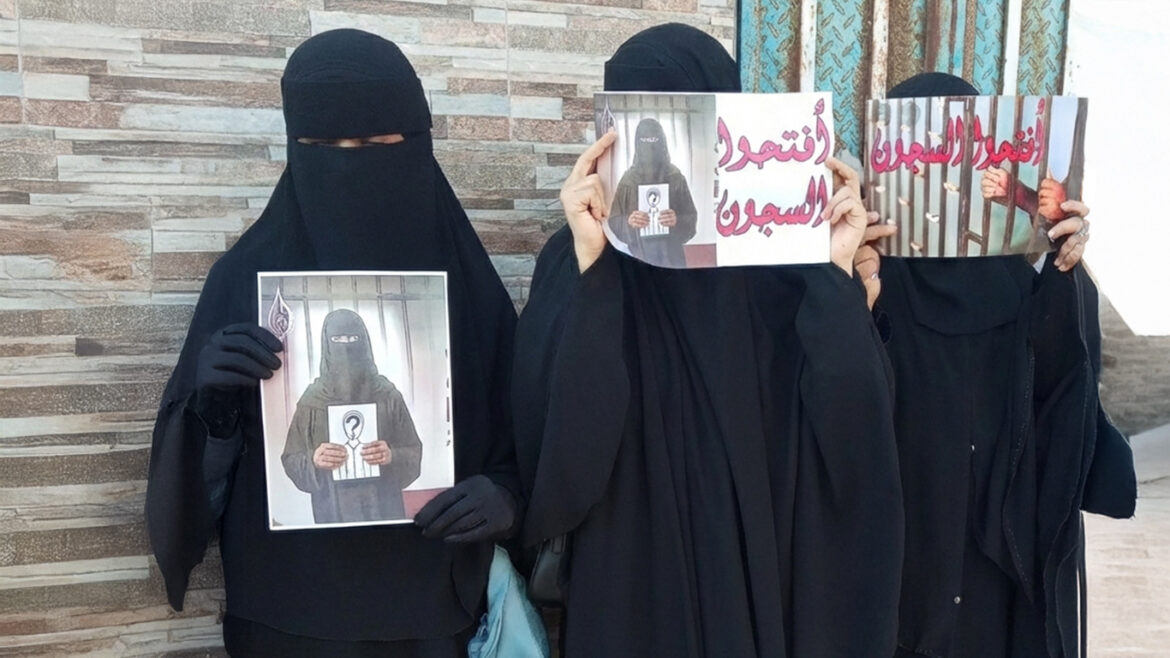
A damning new report by the Cairo Institute for Human Rights Studies (CIHRS) and the Abductees Mothers Association (AMA) exposes a secret detention center in Aden operated by the Southern authorities in Yemen. Known as the Waddah Hall and once a civic center, the facility is part of a wider network of clandestine prisons that has proliferated across Yemen, sites whose existence officials have long denied and only recently begun to acknowledge. This acknowledgment comes in the wake of a rift between the Southern Transitional Council (STC) and the Internationally Recognized Government (IRG), after STC forces attempted to expand control over southern cities in December 2025, prompting Saudi airstrikes and conflicting claims of the Council’s dissolution.
The report that is based on thirty interviews and documents at least eighteen cases of enforced disappearance, some of them dating back to 2016. Widespread patterns of arbitrary arrest, torture, and denial of medical care in Waddah Hall are also exposed by the report.
Families consistently described masked armed men abducting relatives without warrants, and when they sought information, they were threatened. Released detainees recount suspension, electrocution, suffocation, and coerced confessions. Families also describe how forced confessions, sometimes filmed, were used to justify continued detention or enable transfers to other facilities. Conditions inside Waddah Hall and related sites, as reported by families, include solitary confinement in cramped, windowless and unsanitary spaces, insufficient food and water, and systematic obstruction of medical treatment, contributing to severe deterioration in detainees’ health.
“Secret detention facilities like Waddah Hall have not only inflicted immense suffering on detainees and their families but have also entrenched parallel systems of authority that deepen Yemen’s divisions by fostering abuses and bypassing judicial institutions, fracturing communities and undermining prospects for reconciliation.
Their legacy continues to fuel fragmentation today, threatening to push Yemen into even greater disunity if accountability and justice are not urgently pursued,”
Amna Guellali, CIHRS Research Director.
Waddah Hall, located in the Gold Moor area of Al‑Tawahi District in Aden Governorate, sits within the Counter‑Terrorism Camp and in close proximity to the STC security headquarters. The facility is run by security units backed, trained, and financed by the United Arab Emirates (UAE), under the banner of counterterrorism, and operate in large part through the STC. The UAE’s sponsorship embedded a parallel system of repression beyond judicial oversight, while the STC’s role in administering these forces further fractured Yemen’s institutions. In Aden and other southern cities, this dynamic has created overlapping centers of power, with STC‑aligned forces asserting control against the IRG, each backed by rival foreign patrons. These competing authorities have not only undermined judicial institutions but have also entrenched polarization and instability, leaving communities caught between fragmented loyalties and unchecked repression.
Nevertheless, secret detention is not the responsibility of one party alone. Abuses of this kind have been documented across areas controlled by different actors, including forces affiliated with the IRG. Addressing secret detention must not become selective or politicized.
The recent conflict that erupted in December 2025 between the STC (backed by the United Arab Emirates) and the IRG (supported by Saudi Arabia) exposed deep fractures within Yemen’s anti-Houthi camp. Armed confrontations, political infighting, and competing claims to authority in southern areas have fueled renewed instability and drawn regional backers more directly into the dispute. In this volatile context, revelations about secret detention sites risk being instrumentalized by rival parties to discredit one another rather than to deliver justice. Regardless of these power struggles, the rights of detainees and the demands of families for truth, accountability, and reparation must remain the central priority. In this context, President Rashad Al‑Alimi, Chairman of Yemen’s Presidential Leadership Council since April 2022, announced in January 2026 the closure of all unofficial and secret prisons across southern Yemen. It must be implemented transparently with immediate effect, and accompanied by credible investigations, disclosure of detainees’ whereabouts, and accountability for perpetrators regardless of affiliation. Families of the disappeared must not be left caught between rival authorities. Their rights to truth, justice, and reparation must come first.
CIHRS and AMA call on authorities to close Waddah Hall and other secret facilities, ensure detainees are either released or brought before independent courts, and guarantee immediate access to medical care and legal representation. Reparations must be provided to victims and their families, while independent monitors and UN bodies must be granted unhindered access to all detention sites.
The international community, and particularly the United Nations Human Rights Council, must re‑establish independent investigations, preserve evidence, and ensure that perpetrators are held accountable. Victims and their families cannot be denied truth, justice, and reparations any longer.
“Waddah Hall represents more than a location where abuse occurred; it stands as a poignant symbol of how Yemen’s war and foreign interventions have fostered lasting systems of repression. Confronting its legacy is vital for rebuilding trust, securing accountability, and safeguarding the rights of detainees and their families”
Amat Al Salam, AMA’s President.
«HE LOOKED LIKE HE WAS BACK FROM THE DEAD»
THE UNANSWERED FATE OF WADDAH HALL’s DETAINEES IN ADEN
EXEUCTIVE SUMMARY
“He looked like he was back from the dead,” said the wife of a former detainee held at Waddah Hall,1 describing the condition of her husband when he returned after months of incommunicado detention. Her words capture the human toll of a facility that has come to symbolize the legacy of Yemen’s war and the lasting impact of external powers in the city of Aden.
Since 2015, Aden has stood at the center of Yemen’s fragmented political order, shaped by overlapping authorities and external patronage. After the Houthis seized Sanaa, the internationally recognized government (IRG), supported by Saudi Arabia, relocated to Aden, which became its interim capital. Over time, the Southern Transitional Council (STC), founded in 2017 and backed, trained, and financed by the UAE, consolidated de facto control over much of Aden and other southern cities. In practice, Aden is administered through a hybrid model: STC‑aligned forces exercise effective control over daily governance and security, while IRG and Presidential Leadership Council (PLC)2 institutions retain only nominal legitimacy and a limited administrative presence. Efforts to reconcile the IRG and STC through the Riyadh Agreement3 and later the PLC have remained incomplete, leaving Aden governed through partial agreements and persistent fragmentation. This rivalry, compounded by external patronage, has entrenched parallel systems of power and justice, enabling the persistence of arbitrary detention, enforced disappearance, and torture with minimal oversight.
This fragile balance of power collapsed in December 2025, when the STC launched an eastward offensive into Hadramout and Al-Muhra, prompting Saudi coalition forces’4 airstrikes on the city port Mukalla. These strikes, framed as targeting alleged weapons shipments from the United Arab Emirates to STC forces, damaged civilian infrastructure and displaced families. In the aftermath, the UAE announced the withdrawal of its remaining counterterrorism and military units from Yemen. While framed as a military disengagement, the announcement did not signal a full political or financial exit. UAE-backed forces remain embedded in Aden’s security landscape, and the withdrawal raised urgent questions about accountability for abuses committed under its sponsorship.
In January 2026, a delegation of STC members in the Saudi Arabian capital Riyadh announced the dissolution of the Council. The declaration was immediately rejected by other STC leaders and supporters, who denounced it as illegitimate and made under external pressure. The STC president fled to Abu Dhabi, while calls for support to the Council intensified across southern governorates, reflecting deep divisions over the future of southern representation and further destabilizing Aden’s governance.
Waddah Hall, locally known as Qa’et Waddah, was once a civic landmark in the Aden, hosting cultural gatherings, social functions, and public events that reflected the city’s cosmopolitan character. Since 2016, however, it has been repeatedly identified by Yemeni and international rights organizations as a secret detention facility notorious for horrific conditions. Under the control of STC‑affiliated counterterrorism and security units backed by the UAE, and led by figures such as Yusran Al Maqtari and Shallal Ali Shayea, Waddah Hall became synonymous with incommunicado detention and torture.
According to the UN Security Council’s Panel of Experts, credible evidence indicates that detainees were systematically tortured in official and secret prisons, including Waddah Hall, with some cases resulting in death and disappearance that remain unresolved. Its transformation from a civic venue into a detention site coincided with the fragmentation of Aden’s security landscape after 2015, making it emblematic of how war and external intervention have reshaped the city’s institutions. The abduction of Colonel Ali Ashal Al Jaadani in June 2024 reignited scrutiny of Waddah Hall and mobilized families of the disappeared, many of whom have been searching for answers since 2016. His disappearance triggered mass protests across southern governorates demanding truth and accountability.
Despite reported leadership changes within the counterterrorism apparatus, including the escape of Yusran Al Maqtari to Abu Dhabi after being named in indictments and rumors of the facility’s closure, families have received no credible information about the fate or whereabouts of their loved ones. The absence of transparency and accountability continues to fuel public anger and deepen mistrust in the justice system.
Many of those detained at Waddah Hall were abducted on suspicion of belonging to ISIS or other terrorist groups. Instead of being brought before courts, they were subjected to arbitrary arrest, enforced disappearance, torture, medical neglect, and prolonged incommunicado detention. These practices, carried out under the banner of counterterrorism, have entrenched a system of repression operating outside the law.
This report, based on thirty interviews with families of current and former detainees as well as lawyers, human rights defenders, and journalists, documents at least eighteen cases of enforced disappearance alongside widespread patterns of arbitrary detention, torture, and denial of medical care. Families consistently describe arrests conducted without warrants or judicial oversight, often by masked armed men using unmarked vehicles and violence at the point of arrest. Many recount being threatened when they sought information after being neither informed of why their relative had been detained nor where they were held. Accounts gathered from families highlight the torture and ill‑treatment relayed by released detainees, including suspension, electrocution, severe beating, suffocation, and threats against family members.
Families also describe how forced confessions, sometimes filmed, were used to justify continued detention or enable transfers to other facilities. Conditions inside Waddah Hall and related sites, as reported by families, include solitary confinement in cramped, windowless spaces, denial of hygiene, insufficient food and water, and systematic obstruction of medical treatment, contributing to severe deterioration in detainees’ health.
The report underscores that counterterrorism can neither be credible nor effective when pursued through unlawful practices. Torture, secret detention, and coerced confessions undermine justice rather than advance it. Confessions extracted under torture are inherently unreliable, often collapsing under judicial scrutiny and resulting in failed prosecutions, contradictory case files, acquittals, retrials, or prolonged detention without resolution. Detainees have been acquitted after years of abuse, convicted based on torture‑tainted evidence, or held indefinitely without charge, illustrating how unlawful practices obstruct justice, devastate families, and impede the identification and prosecution of individuals who may genuinely pose security threats. They also undermine reconciliation by perpetuating unresolved trauma and intergenerational harm.
Beyond the courtroom, these abuses profoundly damage social cohesion and prospects for national reunification. They erode trust between communities and state institutions, replacing shared citizenship with fear, humiliation, and collective grievance. Families are denied protection under the law, while the absence of truth and accountability deepens polarization. In a country already fragmented by war and competing authorities, such violations entrench parallel systems of power and justice, making institutional unification socially and politically unattainable.
UAE‑backed security units have long played a central role in counterterrorism operations in the city of Aden, but their practices have weakened judicial institutions while entrenching a parallel security system beyond oversight. The UAE’s recent announcement of its withdrawal does not absolve it of responsibility for abuses committed under its patronage, nor diminish the need for accountability. It reflects the extent to which Aden’s governance remains shaped by power struggles rather than stable institutional rules—an instability that external actors can still exploit. Rather than producing yet another informal reshuffling of authority, this moment should prompt genuine efforts to redesign Yemen’s southern institutions by consolidating security command structures, strengthening judicial independence, and restoring civilian accountability.
Rather than fostering stability, abusive practices harden divisions between local forces backed by Iran, Saudi Arabia, and the UAE, civilians and authorities, and local communities and external actors. Social cohesion, institutional unity, and national stability are inseparable from justice; where abuse is normalized, unity becomes impossible and instability becomes structural.
Prospects for reconciliation and durable governance will be further undermined without credible investigations, transparency regarding detainees’ whereabouts, and enforceable accountability mechanisms. Abuses will continue and families will remain without truth or redress. The STC and the internationally recognized government must end arbitrary detention, close secret facilities, and guarantee detainees’ rights to health and due process. Whether the Council is dissolved or persists in some form, accountability for abuses committed under its authority cannot be evaded. The UAE must cooperate fully with accountability mechanisms and cannot evade responsibility for violations committed under its sponsorship. The United Nations and the international community must re‑establish independent investigations, preserve evidence, and condition assistance on measurable human rights improvements.
Waddah Hall is not only a site of abuse but a symbol of how Yemen’s war and external interventions have produced enduring structures of repression. Its transformation from a civic landmark into a clandestine prison reflects the collapse of public life in the city of Aden and the entrenchment of parallel systems of power. Addressing its legacy is essential to restoring trust, ensuring accountability, and protecting the rights of detainees and their families.
METHODOLOGY
This report was jointly prepared by the Cairo Institute for Human Rights Studies (CIHRS)5 and Abductees Mothers Association (AMA).6 Due to ongoing security concerns in Aden and restrictions on access, CIHRS was unable to conduct in-person research in the city. Although CIHRS formally requested permission from Yemen’s Ministry of Human Rights to obtain entry visas for a research mission to Aden, the request was unanswered.
Between February and October 2025, CIHRS and AMA researchers conducted thirty interviews with families of current and former detainees, lawyers, civil society representatives, and journalists familiar with detention conditions in the city of Aden, specifically Waddah Hall. In addition to the initial interviews, researchers carried out follow‑up conversations to verify whether those previously detained remain in custody and whether individuals subjected to enforced disappearance continue to be missing.
To reinforce the reliability of the findings, researchers triangulated testimonies with secondary sources, including reports by United Nations bodies, local and international NGOs, and independent media coverage. This cross-checking process ensured that individual accounts were corroborated by broader documentation of detention practices in Aden.
To protect the safety of interviewees, all names and identifying details have been withheld. Former detainees, as well as their relatives and relatives of current detainees, consistently expressed fear of retaliation should their cooperation with human rights organizations become known.
This report owes its existence to the mothers, wives, sisters, and daughters who, despite pain and tears, courageously shared the stories of their loved ones. Without their testimonies, it could not have seen the light.
Their voices carry the demand for accountability and the hope for justice.
Background
Aden’s Political Landscape
Since 2015 political authority in Yemen has been deeply fragmented, marked by the emergence of competing centers of power involving three principal local actors: Ansar Allah (the Houthis), the internationally recognized government (IRG), and the Southern Transitional Council (STC). After the Houthis seized Sanaa in late 2014, President Abdrabbuh Mansour Hadi’s7 government relocated to Aden, which was subsequently designated the IRG’s interim capital. In March 2015, a Saudi-led coalition launched a military intervention aimed at restoring the IRG’s authority and halting further Houthi territorial expansion. The city of Aden thus emerged not only as the symbolic seat of the internationally recognized government but also as a strategic center of power in southern Yemen. From 2015 to 2017, the United Arab Emirates (UAE), a key member of the Saudi-led Coalition, played a pivotal role in shaping Aden’s security landscape. During this period, the UAE trained, equipped, and financed local militias such as the Security Belt8 and Elite Forces9, which assumed significant responsibilities in stabilizing parts of Aden and adjacent governorates.10 Over time, however, these forces developed a notable degree of autonomy and increasingly aligned themselves with southern interests rather than adhering strictly to the command of the IRG.
In May 2017, the STC was established to formalize southern political aspirations, including calls for greater autonomy of southern Yemen. Backed by UAE-supported armed groups, the STC expanded its influence in Aden and surrounding areas, heightening tensions with the IRG.11 In August 2019, STC aligned forces seized control of key government installations in Aden, including the presidential palace and military camps, in what many observers characterized as a de facto takeover of the interim capital.12
A Saudi-brokered Riyadh Agreement signed in November 2019 sought to reconcile the IRG and STC by integrating the latter into governmental institutions and unifying military and security forces.13 Implementation of the Riyadh Agreement, however, has been incomplete. Numerous deadlines were missed: key appointments for key positions (e.g. governor, security chief) in Aden were delayed, and the redeployment of security forces proceeded slowly amid ongoing disputes.14 Several rights organizations have also documented cases of human rights violations including arbitrary detention and forced disappearances carried out by the STC with the support of UAE in Aden.15
In April 2022, the establishment of the PLC was intended to unify anti-Houthi factions, including the STC, under a single political structure.16 Despite this institutional change, Aden continued to be governed through overlapping authorities: the STC controls day-to-day governance and security while IRG/PLC institutions maintain formal legitimacy and limited administrative footprint.
Though the UAE progressively started scaling down its overt combat role after 2019, it continues to exert influence through local security actors, investment in infrastructure (especially in southern ports), and political patronage.17 Local security forces supported by the UAE also continue to operate with no accountability, and families of victims continue to be denied information about the fate and whereabouts of their relatives.18
By late 2025, this fragile balance collapsed into open confrontation. On 8 December 2025, the STC launched a military offensive eastward, announcing the seizure of Hadramout and Al-Mahra.19 Saudi-backed government forces quickly countered, retaking the city of Mukalla and other key areas. On 30 December, coalition airstrikes on Mukalla Port, framed as targeting alleged weapons shipments from the UAE to STC forces, damaged civilian infrastructure and displaced families, deepening the humanitarian crisis.20 In response, the UAE announced the completion of its troop withdrawal from Yemen, while the Yemeni government declared the termination of its counterterrorism partnership with Abu Dhabi.21
The escalation continued into January 2026. Saudi Arabia ordered the closure of Aden International Airport, severely restricting civilian movement and cutting off vital access to medical care, education, and family reunification.22 Shortly thereafter, Saudi Arabia convened negotiations in Riyadh. The STC president failed to join the delegation, reportedly fleeing to Abu Dhabi, while delegates present were allegedly pressured into announcing the dissolution of the Council.23 The declaration was swiftly rejected by STC members who remained in Aden. Subsequent Saudi airstrikes on Al-Dhale governorate, an STC stronghold, further inflamed tensions, causing civilian casualties and displacement.24
In the aftermath, President Rashad al-Alimi25 announced on 12 January 2026 the closure of all informal and secret detention centers in the governorates of Aden, Lahj, and Al-Dhale, alongside the release of detainees held unlawfully.26 While this directive marked a positive step, its credibility is contingent upon transparent implementation, independent monitoring, and cooperation from all factions, including UAE-backed units.
As of early 2026, the city of Aden’s political landscape reflects both continuity and rupture: the IRG and PLC retain formal legitimacy, UAE-backed forces continue to wield influence despite the announced withdrawal, and the STC faces an existential crisis amid contested claims of dissolution. These developments underscore the volatility of Aden’s governance, where external patronage, internal fragmentation, and unresolved abuses converge to perpetuate instability.
Waddah Hall
According to local accounts and urban history narratives, Waddah Hall, locally known as Qa’et Waddah and lying on Aden’s southern edge, was originally used as a public events venue and served as a space for cultural gatherings, social functions, and civic engagement. Its role as a civic landmark reflected Aden’s vibrant social life and its legacy as a cosmopolitan port city.
Since 2016, however, Waddah Hall, often referred to as “Counter-Terrorism prison,” has been repeatedly identified by Yemeni and International rights organizations as a location used for secret detention with horrific conditions.27 This detention facility has since been under the control of Counter-Terrorism28 and security units affiliated with the STC and UAE-backed forces, operating under the authority of Yusran Al Maqtari, head of Counter-terrorism unit in Aden, and Shallal Ali Shayea, the prison’s director.29 According to the United Nations Security Council’s Panel of Experts on Yemen, credible evidence was gathered that STC “forces are systematically torturing men in official and secret prisons, including in Waddah secret prison in Aden Governorate, which reportedly resulted in the death of men whose whereabouts were and still are unknown.” 30 Although there are rumors that Waddah Hall was closed for several years before 2010, its conversion into a detention facility appears to coincide with the security fragmentation that followed the 2015 conflict in Yemen generally and the city of Aden specifically.
For years, the existence of secret detention facilities such as Waddah Hall (as identified by international human rights organizations31 and the UN Panel of Experts as operating outside Yemen’s official prison system) and the practice of enforced disappearance in Aden, remained largely absent from public discourse.32 That changed in June 2024, when widespread public outrage was triggered by the abduction of Colonel Ali Ashal Al-Jaadani, a senior officer from Abyan, by Counter-Terrorism forces affiliated with the STC. His disappearance mobilized families of other missing persons, some of whom have been forcibly disappeared since 2016, leading to mass protests across southern governorates demanding truth and accountability.33
The case reignited scrutiny of Waddah Hall, which was long associated with incommunicado detention and torture. Despite reported changes in leadership within the Counter-Terrorism apparatus, including the escape of Yusran Al-Maqtari to Abu Dhabi in July 2024 after Aden’s police chief issued an arrest warrant against him, and news of the facility’s closure, families have received no information about the fate or whereabouts of their loved ones.34
Human rights monitors have received numerous reports and complaints from relatives of detainees, including mothers, wives, sisters, and daughters, regarding the arrest and disappearance of their loved ones in Aden. AMA and CIHRS have documented many of these cases, conducted interviews with families of former detainees, and gathered detailed information on detention conditions at Waddah Hall. The findings point to a pattern of abuse, denial of due process, and prolonged incommunicado detention.
Arbitrary Detention and Enforced Disappearance
AMA and CIHRS have documented a consistent and alarming pattern of grave human rights violations committed by security forces and armed groups affiliated with the STC and supported by the UAE operating in the city of Aden. Victims and their families have provided extensive testimony detailing arbitrary arrests, prolonged enforced disappearances, and systematic denial of fundamental legal protections. These testimonies were corroborated through interviews with former detainees, relatives, lawyers, and local monitors, as well as analysis of official records and credible media and rights organizations reports.35 Based on this triangulation, the abuses were predominantly attributed to UAE backed units in the city of Aden including the Counter-Terrorism Unit, the Security Belt forces, and other affiliated armed groups operating outside effective judicial oversight.36
The continued lack of official communication regarding the fate and whereabouts of detainees constitutes a violation of the family’s right to know, as protected under Article 24 of the International Convention for the Protection of All Persons from Enforced Disappearance.37 This prolonged silence reflects not only institutional neglect but moreover a denial of justice, which deepens the suffering of families left in the dark.
In all the interviews conducted with the eighteen families of current and former detainees, witnesses consistently described arrests as unlawful and carried out without judicial oversight. None of the individuals were presented with arrest warrants at the time of detention. Security forces failed to identify themselves, and in many cases, the arrests were carried out by masked men in military uniforms, often heavily armed and traveling in unmarked vehicles who also subject the individuals to violence including beating and blindfolding. Families of detainees consistently reported that they were never informed of the reasons for the arrests nor the location to which their relatives were taken. The lack of official acknowledgment or documentation has left families unable to trace the whereabouts of their loved ones, resulting in prolonged periods of enforced disappearance. In many cases, families only learn of a detainee’s location through informal channels, such as accounts from former detainees who saw them at the Waddah Hall detention facility, or when detainees are transferred to another facility, most commonly Bir Ahmed Prison, where limited family visits are permitted. For those who remain incommunicado and have not been released or relocated, their fate and whereabouts remain entirely unknown.
One mother told AMA, that on 18 December 2021 masked men in a vehicle with tinted windows forcibly detained her son from their house in front of his family and neighbors.38 Witnesses, including his sister and nearby residents, reported that the men struck him on the head when he resisted, causing bleeding. The apprehending individuals did not identify themselves, nor did they provide any legal documentation or explanation for the arrest. According to the mother, “Marwan went to work as usual in the morning, and when he returned home, he stepped outside around 2:00 p.m. to help his grandmother carry her belongings.” The mother filed a report at the local police station, and she was told by the officers that the arrest had not been carried out by the police but rather by a “special authority.” After further inquiries with government offices, the family learnt that the Counter-Terrorism Unit had conducted the arrest.
The family did not receive any information about their son’s whereabouts for at least eight months, until a visit to Waddah Hall was carried out by a locally formed committee established by the STC. During this visit, one of the committee members told the family informally, while refusing to be quoted, that they had seen their son alive inside Waddah Hall.
A few months prior to the arrest of Marwan, his older brother Omar, who works at a shop, was also arrested under similar circumstances.39 On 19 June 2021, at approximately 5 p.m., masked forces in military uniforms forcibly entered the shop. Witnesses told the family that four military vehicles arrived at the scene, and armed personnel apprehended Omar and his colleague without presenting any arrest warrant, identifying themselves, or providing any legal grounds for the operation. Neighbors later identified the men as members of the Security Belt Forces, an STC-affiliated counterterrorism unit under Jalal al‑Rubaie.
Both men were transported in a military vehicle to Al-Nasr Camp, an unofficial detention facility operated by UAE backed forces where they were initially held. Omar’s colleague was reportedly detained mistakenly, as the two shared the same first name. After verifying the identity of their intended target, the arresting forces released the colleague but continued to hold Omar in custody. At no point did the authorities provide a legal basis for his detention or notify his family of his whereabouts. When the family went to Al-Nasr Camp, they were informed through one of the security men that Counterterrorism forces picked Omar up and moved him to Waddah Hall. At the time of writing this report, both brothers remain in detention.
In July 2023, during the family’s ongoing efforts to advocate for their release, their 55-year-old father was himself arrested while at work.40 Masked members of the Counterterrorism unit raided his shop, forcibly detained him, and warned bystanders not to intervene. He was held for eighteen days at Waddah Hall before being released without charge.
In other instances, individuals were apprehended in streets or public squares known to be common gathering points. Families typically became aware of the arrests only through friends or neighbors who witnessed the incidents. One such case concerns Anwar, a political activist, aged 52 at the time of his arrest, who was drinking tea on the street with a friend on the afternoon of 27 December 2022 when eight masked men in military uniforms arrested him, threatening his friend at gunpoint to prevent any interference.41 The family later learned from former detainees that he is being held at Waddah Hall. To date, they have not been permitted to visit him or provide him with any medical assistance, despite his diabetes, heart condition and hypertension.
While the arrest of Karam was similar in how it was conducted, it was different in how his family learned where was held.42 On 19 September 2019, at approximately 4:00 a.m., masked men affiliated with security forces raided his home and forcibly detained him in front of his family. According to his sister’s account to AMA, the arrest was carried out without explanation or legal documentation.
For nearly five weeks, the family searched desperately for information about his whereabouts. Their first indication came when Yusran al-Maqtari, the head of the Counterterrorism Unit in the city of Aden, contacted the sister and instructed her to bring her brother’s mobile phone to Waddah Hall. This call marked the first acknowledgment of his detention and confirmed that he was being held incommunicado by counterterrorism forces. The families of at least ten individuals interviewed by AMA and CIHRS stated that their relatives were subjected to physical abuse during arrest operations. One such case concerns Youssef, who has a documented mental health condition. Medical records regarding his condition were reviewed by CIHRS and AMA after being presented by his mother. He was assaulted on 17 September 2016 while waiting for a pharmacy to open in order to purchase diabetes medication for his mother.43 According to eyewitness accounts, masked men in military vehicles struck him repeatedly with the butts of their rifles until he lost consciousness. Neighbors who witnessed the incident subsequently informed his mother of the attack.
Youssef, whose family said he had no known political affiliations and was not involved in activism, was taken into custody and held incommunicado. Three months after his arrest, his mother visited Waddah Hall, where she met with the facility’s director, Shallal Ali Shayea. During the visit, Shallal confirmed her son was held at Waddah Hall, saying, “We will keep him for couple of months only.” He then threatened her, saying, “If you don’t leave and go home now, I will bring in your son and kill him in front of your eyes.” On a subsequent visit, Shallal refused to meet with her. Nearly nine years since Youssef’s arrest, his family has received no communication from him. His father passed away in 2021, and his mother continues to search for answers regarding his fate and whereabouts.
On 17 November 2016, Alaa was traveling by car with a friend when they were stopped at a security checkpoint.44 The armed personnel at the checkpoint reportedly opened fire on the vehicle and then arrested both men. The family of Alaa received no formal notification of his arrest and learned of the incident only through acquaintances who had heard about the shooting. Two months later, Alaa’s friend was released and informed the family that Alaa remains detained at Waddah Hall. Since the day of his arrest, Alaa has remained forcibly disappeared. His family has received no official communication regarding the reasons for his detention, his location, or his condition. To date, his fate remains unknown. The prolonged uncertainty and lack of information have had devastating consequences for his family. In 2024, Alaa’s eldest son passed away, and his brother died of a heart attack shortly after receiving informal reports that Alaa had been subjected to severe torture, including the mutilation of his limbs. These accounts, though unverified, reflect the profound psychological toll that enforced disappearance inflicts not only on the victims but also on their families.
After Colonel Ali Abdullah Ashal Al‑Jaadani’s case sparked protests, demonstrators and community members called for the prosecution of senior officials, and rumors spread about the closure of Waddah Hall, Alaa’s wife told CIHRS, “If they [officials] say that they closed Waddah Hall, then where are the prisoners?” Enforced disappearance inflicts long-term suffering on entire families; emotionally, socially, and economically. The uncertainty surrounding a loved one’s fate causes enduring trauma, disrupts family structures, and places immense strain on those left behind. It is a violation that extends far beyond the individual, leaving deep scars across generations.
On the night of 1 April 2022, Nasser was sitting with a group of friends near his grandmother’s residence in the city of Aden, when several military vehicles arrived.45 Masked men disembarked and moved into the area on foot, firing live ammunition indiscriminately without killing anyone. Nasser, who uses a cane due to disability, was forcibly seized and thrown onto one of the military vehicles. His walking aids were confiscated and discarded by the armed men.
Shortly after the arrest, a neighbor contacted the family to inform them that Nasser had been taken but was unable to identify the detaining authority. Over the following year, the family conducted extensive searches for information on his whereabouts, visiting the Security Directorate, the Criminal Investigation Department, Al-Mamdara Police Station, and Al-Mualla Police Station. None of them provided any information about his fate or location. After a year of uncertainty, the family received informal reports that Nasser had been seen at Waddah Hall. When they visited the facility, officers at the gate initially denied any knowledge of him but instructed the family to wait for a senior official. Upon arrival, the official acknowledged that Nasser had been brought to the facility but claimed that he had subsequently been transferred elsewhere. He refused to provide any additional information and instead directly threatened the family, warning: “Don’t ever mention his name again. If you do, I will make you disappear.”
Another case is the one of Saleh, an officer with the Security Belt forces in the city of Aden, who disappeared under troubling circumstances.46 On the morning of 24 February 2017, Saleh left home for what was presumed to be a routine work shift, as he regularly reported for duty. When he failed to return home after ten days, the family started searching for him unsuccessfully and later learned through a WhatsApp message that he was held at Waddah Hall. However, when they went and met with the prison’s director, he denied detaining him and told the family; “You can go in and search yourself. If your son is here, you can take him and leave.” The family did not conduct a search, recognizing both the futility and the risks of such an offer, and left without their son. To date, his fate remains unknown. \pagebreak Despite the differences in each individual case, the trends remain tragically consistent. Families are rarely informed of where their sons have been taken, and in most instances, they are left in the dark about their fate. The search for truth becomes a prolonged and painful ordeal, marked by misinformation, institutional denial, and threats. For many, the journey to locate a loved one is met not with answers, but with silence and terror.
WADDAH HALL: HORRIFIC DETENTION CONDITIONS
All testimonies collected by AMA and CIHRS detainees reveal a consistent pattern of torture and other forms of ill-treatment including coerced confessions taken under torture in Waddah Hall. Family members of current or released detainees described acts of physical violence, psychological abuse, and degrading treatment, often inflicted while detainees were held incommunicado and denied access to legal counsel or medical care. These testimonies raise serious concerns about violations of Yemen’s obligations under international law, obligations that rest with the internationally recognized government (IRG) as the formal state party, but which also extend to de facto authorities such as the STC and UAE‑backed units exercising effective control in the city of Aden. The absolute prohibition of torture and cruel, inhuman, or degrading treatment or punishment applies universally and cannot be derogated.
Individuals detained at Waddah Hall typically become known to their families under one of two circumstances: either they are released or they are transferred to another facility, most often Bir Ahmed Prison, where limited family visits are permitted. It is often only at this stage that families begin to learn about the conditions and treatment their relatives endured while held at Waddah Hall, including having to sign or film confessions. These forced confessions, often extracted under torture, seem to serve as a precondition for release or relocation.
Forced Confessions under Torture
For those who remain forcibly disappeared, information about their fate and treatment is scarce and typically reaches families through informal channels, such as former detainees or sympathetic individuals working within the prison system. In the case of Marwan, his family was unofficially informed of his detention at Waddah Hall only after a visit by a locally formed committee established by the STC.47 Prior to this, the family had searched for him for nine months without success. A week after receiving this information, Marwan was transferred to Bir Ahmed Prison.
During a visit at Bir Ahmed prison, his mother described him as “alarmingly thin from hunger” and noted visible marks of torture on his wrists and legs. He reported that while held at Waddah Hall, Aden’s Counterterrorism head, Yusran Al Maqtari, and officer Samer Jandoub were directly involved in his torture. He explained that the marks on his wrists were caused by being suspended for eight hours with his legs dangling. He further recounted being beaten, electrocuted with an exposed air conditioner cable, and struck on the legs with a metal door.
While detained at Waddah Hall, Marwan was subjected to threats and coercion aimed at forcing a confession. Officers threatened to harm his family, explicitly stating they would bring in his mother and siblings and assault them if he refused to admit to the allegations of belonging to a terrorist organization. Under conditions of continuous beating and torture by suffocation with a wet towel placed inside his mouth, Marwan ultimately agreed to be filmed in a video confessing to membership in ISIS. Following this coerced confession, he was transferred to Bir Ahmed Prison.
Ibrahim, Marwan and Omar’s father, who was detained for eighteen days after extensive search for his sons, described being held in solitary confinement for four days under conditions so extreme he could not distinguish day from night.48 Guards refused to speak to him, addressing him only as “Hajj” and ignoring his repeated requests for basic information, including the time for prayers. Before being transferred to a communal cell, authorities presented the father with a document and pressured him to sign a confession stating he had received money from ISIS. They dismissed his fears, and his rejection of what was written in the paper, telling him, “Just sign, it’s nothing serious.” The man, who suffers from hypertension and had recently suffered a stroke, was forced to sign the document despite its fabricated contents. He pleaded to the officers and told them he would stop pursuing his sons’ cases if they released him.
In the case of Karam, his family only learned of his whereabouts one year after he was arrested in September 2019 from his home in the city of Aden, when he appeared at Bir Ahmed Prison.49 By then, he looked physically unwell and showed signs of psychological distress and disorientation. During a family visit, the detainee disclosed that he had been coerced at gunpoint into recording a confession. He stated that prison officers had subjected him to torture including electrocution and threatened to harm his family if he refused to comply. He told his family that he was handed a prepared script and forced to recite on camera that he was a member in an armed group and affiliated with ISIS.
Karam showed obvious signs of facial trauma, particularly to the jaw. According to his family, he struggled to speak and showed signs of intense pain. He told them that Yusran Al Maqtari repeatedly stomped on his face with his military boots, resulting in permanent injury to his jaw. He also showed marks of torture on his wrists and told the family that prison officers used to hang him by the wrists from a moving vehicle, dragging him for extended periods. He told his family that his vision has worsened and he also suffers from back pain after spending a year in Waddah Hall in these horrific conditions. The family told AMA, “He told us that he was held in an overcrowded cell and were provided only one meal a day. And when they asked for water, the officers responded to drink their own urine.”
Karam was moved to Bir Ahmed Prison after he was forced to confess to belonging to a terrorist group. Over the following eight months, he appeared before a judge at the Criminal Court, who eventually ruled that he was innocent.50 Despite this ruling, Karam was then subjected to a three-month enforced disappearance. He later reappeared in Bir Ahmed Prison, after a different judge tried his case again and sentenced him to death. After the family submitted an appeal, the death sentence was overturned and replaced with a ten-year prison term, which he is currently serving at Bir Ahmed Prison.
On the morning of 24 July 2016, Nabil, a private sector employee described by his wife as “not an activist or anything, just a normal citizen” was arrested by masked men believed to be affiliated with Counterterrorism forces in Aden.51 As in many other cases, the family was not officially notified of the arrest and only learned of it through neighbors who witnessed the incident.
For a month, the family searched for him without success. Then, they received a brief phone call from Nabil, informing them that he was being held at Mansourah Prison and was permitted to receive visits. During a ten-minute visit conducted through a glass partition, he disclosed that he had previously been detained at Waddah Hall, where he was subjected to torture and forced to record a false confession claiming affiliation with a terrorist group. He reported being electrocuted and beaten so severely that he was unable to open his hands.
Shortly after this visit, Nabil, was removed from Mansourah Prison by security forces affiliated with Waddah Hall. For nine years, his whereabouts have remained unknown, and he continues to be subjected to enforced disappearance. No charges were ever brought against him, and his family has received no official information regarding his fate.
Subjecting detainees to torture and coerced confessions, often recorded and used to falsely implicate them in terrorism-related charges, is explicitly prohibited under Yemeni law. Article 6 of the Yemeni Criminal Procedure Law states: It is prohibited to torture the accused or treat them in a manner that is inhumane, physically, or mentally harmful to coerce them into confession; any statement proven to have been made by the accused or witnesses under such conditions shall be disregarded.52 Furthermore, Article 16 stipulates that criminal proceedings in cases of torture do not lapse with the passage of time.53 The systematic use of torture and coerced confessions in facilities such as Waddah Hall therefore not only undermines the integrity of justice but also constitutes a direct violation of Yemen’s own legal framework.
Degrading Treatment and Psychological and Physical Abuse
Several testimonies that the families have gathered, either during rare visits following the transfer of detainees to new facilities or after their release, consistently show the use of solitary confinement and inhumane cell conditions. Survivors and relatives recounted to our organizations prolonged periods of isolation in cramped, windowless cells, without access to basic hygiene or sunlight. These accounts reveal a pattern of detention practices designed not only to punish but to degrade the detainees and break their physical and psychological states.
Bilal, aged 49, was vocal on social media platforms such as Twitter (X) and Facebook about the deteriorating economic conditions in the city of Aden and the struggles of the Yemeni people with the scarcity of water and electricity.54 Bilal used to publicly criticize the UAE and its intervention in Aden. He was forcibly detained on 3 May 2021 by masked armed men while returning home with two colleagues. He then was transferred between multiple locations before being held at Waddah Hall for a period of one year and three months. His wife recounted to CIHRS: “He was coming home with two of his colleagues when armed masked men arrested him with one of his colleagues.” While the colleague was released a few weeks later, he remained visibly traumatized and shared almost no information about the incident or Bilal.
The family undertook extensive efforts to locate Bilal but received no official information regarding his whereabouts. He eventually returned home unexpectedly after one year and three months; he was never formally charged or prosecuted. His wife described his condition upon arrival: “He looked like he was back from the dead, like he had aged ten years.” Bilal later disclosed that he had been held in solitary confinement in a cell known locally as el daghata, (the pressure cell) a term associated with extreme physical restriction. The cell was so tight that he was forced to use plastic bags as a toilet. He recounted that officers blindfolded him, drove him to an unfamiliar street, and pushed him out of the vehicle before he managed to find transportation home. Out of fear for his family’s safety, Bilal refused to share further details about his detention. His wife added: “He was scared for us. He stayed with us for a couple of days before fleeing the city to avoid being rearrested.”
Yassin, who was released after being held in Waddah Hall for two weeks, told his family about the psychological abuse and intimidation he and other prisoners were subjected to.55 At one point and after being beaten with rifles, the officers forced him to choose his method of death, whether he preferred execution, hanging, or being shot. “Prepare yourselves,” he and the other prisoners were told, “tomorrow you will be executed.”
The psychological torment escalated when he and a group of detainees were blindfolded and taken by Counterterrorism forces from Waddah Hall, driven to a remote location, and told they were about to be killed. Left in the street, still blindfolded, they waited in silence, believing they were moments away from death. They were eventually approached by a passerby. Only then did they realize they had been abandoned and released without explanation, in an unfamiliar area.
This deliberate simulation of execution constitutes a form of psychological torture and cruel, inhuman, and degrading treatment under international law. The use of such terrorizing tactics, inflicting extreme fear without due process or accountability, reflects a broader pattern of abuse that demands urgent investigation and redress. Survivors of these practices carry lasting trauma, while the absence of justice perpetuates impunity for those responsible.
On 1 July 2016, Counterterrorism forces in Aden arrested Hassan while he was spending time with friends after Taraweeh prayers during Ramadan.56 He was taken along with one other friend, both handcuffed and with their faces covered in plastic bags. Like all the documented cases, the arrest was carried out without a warrant or any official notification to the family. For a month, the family searched for Hassan without receiving any information about his whereabouts. Eventually, they received a brief and alarming phone call from him, facilitated unofficially by a prison officer. According to the family, “He sounded terrified and said, ‘Do everything you can to get me out of here, you must get me out of here,’ and then he hung up.” He informed them that he was being held at Waddah Hall.
Subsequently, a relative employed as a prison officer at Waddah Hall informed the family, off the record, that he had seen Hassan in detention and that he was being subjected to torture. This included being handcuffed and suspended from a wall, a method consistent with other documented cases of abuse in the facility. Since that call, the family has received no official confirmation of Hassan’s detention, nor any information about his legal status or physical condition. His fate and whereabouts remain unknown.
Deliberate Lack of Access to Medical Care
Families of current or former detainees at Waddah Hall reported that their relatives were systematically denied access to medical care, in violation of international human rights and detention standards. Many detainees entered custody with chronic illnesses or other pre-existing health vulnerabilities that were exacerbated by torture, ill treatment, inadequate living conditions, and prolonged neglect. Others developed serious physical and psychological complications as a direct result of abuse in custody.
The city of Aden’s climate itself compounds the suffering of detainees. In the summer months, temperatures regularly soar above 40°C, turning poorly ventilated cells into stifling environments that intensify dehydration, heat exhaustion, and the progression of chronic illnesses. For detainees already weakened by torture, neglect, and lack of medical care, the extreme heat magnifies health risks and accelerates deterioration.
According to testimonies, medical treatment was entirely absent in Waddah Hall, and even in secondary locations, such as Bir Ahmed Prison, available care was minimal, inconsistent, and often dependent on families, who were frequently barred from delivering essential medication. The deliberate obstruction of medical care reflects a broader policy of dehumanization and punitive disregard for detainees’ health and rights.
Marwan, a previously healthy 21‑year‑old, suffered severe medical consequences as a direct result of torture.57 Prolonged suspension from a wall caused lasting damage to his wrists and joints, while repeated electrocution may have left enduring effects. He later reported to his mother that he was experiencing symptoms consistent with irritable bowel syndrome and hemorrhoids, conditions that were exacerbated by the harsh detention environment.
At Waddah Hall, Marwan was denied all medical care. Following his transfer to Bir Ahmed Prison, his mother was allowed to provide him with paracetamol through the prison administration, but he was offered no further treatment. His ongoing medical needs remain unaddressed, underscoring the systematic neglect of detainees’ health.
Anwar was arrested in December 2022 and remains forcibly disappeared to date. His family learned of his detention only through accounts from former detainees who reported seeing him inside Waddah Hall. Anwar suffers from high blood pressure, heart disease, and diabetes, a condition that requires consistent medication and monitoring.58 According to his family, he has already lost consciousness inside Waddah Hall due to unmanaged blood sugar levels. His wife explained: “Those who saw him inside told us he had already fainted because of his diabetes. We tried to deliver his medicine to Waddah Hall, but the prison officers refused to meet with us.”
Given Waddah Hall’s notorious reputation for harsh conditions, lack of medical care, and widespread suffering among detainees, Anwar’s family fears the worst for his health. They believe he is being denied essential treatment and warn that without access to medication, his condition could deteriorate rapidly, potentially leading to a diabetic coma or other life‑threatening complications. Nasser, who has polio affecting one leg and relies on walking aids, was subjected to additional harm during his arrest when security forces violently discarded his crutches.59 Deprived of essential mobility support, his condition reportedly deteriorated, placing him at heightened risk of permanent damage to his leg and overall health. His family remains deeply concerned about his ability to walk and the deterioration of his physical state. As he remains forcibly disappeared and his relatives have received no information about his whereabouts, they believe he has been denied necessary medical care or assistance.
Several detainees such as Seif and Ibrahim, who suffer from chronic conditions such as hypertension have been denied access to essential medication due to the lack of medical care in Waddah Hall.60 Without treatment, high blood pressure can rapidly escalate, increasing the risk of stroke, heart attack, kidney damage, and other life-threatening complications. Families report that even when they attempted to deliver prescribed medicine, prison authorities refused to accept it. Such deliberate neglect places detainees at constant risk of medical emergencies including death.
Lack of Due Process
Detention practices at Waddah Hall are marked not only by torture and medical neglect, but also by a complete absence of due process. Detainees are held without formal charges, denied access to lawyers, and prevented from communicating with their families. Many are subjected to coerced confessions under torture, which are then used to justify their continued detention despite the absence of credible evidence. The secrecy surrounding arrests and enforced disappearances further strips detainees of their legal rights, leaving families in prolonged uncertainty. This situation is compounded by the limited financial capacities of families, who are often unable to afford legal representation. Even when families attempt to secure lawyers, the lack of transparency and obstruction by authorities renders meaningful legal assistance nearly impossible. As a result, detainees remain trapped in a system where their rights to defense, fair trial, and judicial oversight are systematically denied.
A lawyer (who preferred to remain anonymous) providing legal aid to detainees and their families in Aden described in an interview a pattern of arrests carried out without judicial warrants, often at night or in public spaces, and followed by enforced disappearances in undisclosed locations.61 He explained that many detainees were charged with terrorism or “disturbing security” based on weak or malicious reports, while others were targeted for their political opinions or personal disputes with security officials. According to his account, detainees were frequently denied timely court hearings and subjected to torture and ill‑treatment. Even those acquitted were often released only on bail and strict conditions rather than unconditionally.
Youssef’s mother attempted to secure legal representation for her son, but the lawyer she hired was unable to access any information regarding his arrest or detention.62 The only confirmation she received came when she personally went to Waddah Hall and met with Major General Shallal Ali Shayea, who acknowledged that her son was being held there. Beyond this, the lawyer was powerless: Youssef was never officially charged with any offense and was denied access to legal counsel. This complete obstruction of legal process left the family without any means to challenge his detention or safeguard his rights.
Bassel was arrested on 16 July 2024, yet his family was never formally informed of his arrest or place of detention.63 They only learned of his whereabouts through a former detainee who reported seeing him inside Waddah Hall. In their search for legal assistance, the family found no lawyer willing to represent them, citing fear and intimidation. Bassel remains detained without charge, without access to legal defense, and without any judicial oversight, reflecting the pervasive climate of terror that prevents families from pursuing justice.
Hassan’s family reported that they hired a lawyer for a period, but the effort proved entirely futile.64 Despite the financial costs, the lawyer was unable to obtain any information or achieve progress with the authorities. He accompanied the family in visiting multiple governmental offices without result and ultimately withdrew from the case after expressing fear and a sense of being threatened. Hassan remains detained without charge since his arrest in July 2016, while his family has been left without legal recourse or protection.
At Waddah Hall, Marwan and Omar were tortured and forced to confess to being members of ISIS.65 These coerced confessions formed the basis of their transfer to Bir Ahmed Prison, where the family was finally able to hire a lawyer as they were notified that they will stand before the Criminal Court. Upon reviewing the case files, the lawyer discovered that in addition to the ISIS charges, the brothers were also accused of killing a neighbor. However, the case papers contained contradictory information: the alleged killing was recorded on two different dates. During her interview, the mother said, “The lawyer pointed out to the judge, ‘How can a man die twice on two different days?’”
Despite both brothers being implicated in the same case and facing identical charges, the judiciary sentenced one brother to ten years’ imprisonment, while the other has yet to receive any formal sentence. Both remain detained in Bir Ahmed Prison, and their lawyer’s repeated requests for further court hearings have been ignored.
These cases illustrate the dual violations faced by detainees: first, the extraction of confessions under torture at Waddah Hall, and second, the deeply flawed judicial process at Bir Ahmed Prison, where contradictory evidence is disregarded, sentences are arbitrary, and detainees are denied their right to timely and fair hearings.
According to his own account relayed to family members, Karam was transferred to Bir Ahmed Prison after being forced to record a confession while bearing visible torture marks on his face and hands at Waddah Hall.66 Initially, the Criminal Court found him innocent. However, shortly thereafter he was forcibly disappeared again by Counterterrorism forces. During this period, his family, facing severe financial constraints, was unable to hire a lawyer and remained unaware of his reappearance in Bir Ahmed Prison. They later learned that Karam had been sentenced to death in absentia, based solely on the coerced video confession recorded before in Waddah Hall in which he appeared with clear signs of torture. Once the family discovered the sentence, they submitted an appeal. The court subsequently reviewed the case and commuted the death penalty to ten years’ imprisonment.
Karam remains detained under a judgment that reflects both the reliance on torture‑tainted confessions and the absence of fair trial guarantees. He is currently serving his sentence in Bir Ahmed Prison. Due to the family’s limited financial resources and the irregular visitation policies enforced by the prison administration, they are rarely able to visit him.
Families of detainees consistently report that their attempts to seek information or file complaints through police stations and security administration offices have yielded no results. Complaints are routinely ignored, leaving families without any legal recourse or acknowledgment of their sons’ detention.
COLLECTIVE HARM: THE BURDEN ON THE FAMILIES
The consequences of arbitrary arrests, enforced disappearances, and other grave human rights violations extend far beyond the individuals directly targeted. Their families, particularly wives, mothers, daughters, and sisters, are left to bear profound psychological and material harm in the wake of these abuses. The uncertainty surrounding the fate and whereabouts of detained or disappeared relatives, often compounded by unverified reports and rumors of deaths in custody, subjects families to constant fear, anxiety, and emotional distress. Many experience chronic psychological trauma, social isolation, and the breakdown of family dynamics, with children often exhibiting behavioral or emotional regression and, in some cases, taking on responsibilities well beyond their age.
Following his arbitrary detention and thirteen-month enforced disappearance in abhorrent conditions at Waddah Hall, Bilal was forced to flee his home city of Aden and relocate his family abroad due to fear of rearrest and reprisals against him and his relatives. His wife was compelled to uproot the family, securing new schools for their three children within an unfamiliar educational system. The children faced the added burden of adjusting to entirely new academic environments, forming new friendships, and navigating the psychological strain associated with displacement. The wife also had to seek employment to sustain the family’s life in exile. Forced to leave her own country and separated from her extended family and support networks, she now confronts the profound social, emotional, and economic hardships that accompany life in displacement.
The economic repercussions on the families whose relatives remain detained or forcibly disappeared are equally severe. In most cases, the detained individual is the household’s primary breadwinner, and his sudden absence plunges families into immediate financial insecurity. Hatem’s sister broke into tears when she told us “He took care of all of us, his parents, his wife, me his widowed sister, he used to buy the school supplies for my children. He was the shadow that sheltered our home.” She added, “We want to know where he is, alive or dead.”
The costs of repeated prison visits, transportation, and attempts to hire legal representation place additional burdens on families already living with limited resources. Additionally, the families face exploitation by actors who take advantage of their vulnerability. A sister of one of the disappeared told AMA “My mother hired a lawyer and paid him enormous amount of money and told him repeatedly ‘I just want to know where my son is, so I can be at peace’. He took the money and disappeared.”
Families told us that prison officers frequently demand money from relatives in exchange for information about detainees. In many cases, families pay significant sums only to receive no information, or to be misled, with officers disappearing after taking the money. In other cases, mothers and wives report being warned against further inquiries, such climate of intimidation makes it nearly impossible for families to advocate for their relatives’ rights, reinforcing the broader pattern of denial of due process and accountability.
Youssef’s mother met with Major General Shallal Ali Shayea, who informed her that her son was being held at Waddah Hall. During a subsequent encounter, she was directly threatened: Shallal warned that if she did not leave, he would bring her son and kill them both. Despite this intimidation, she continued to return to the prison many days, waiting at its entrance from 6:00 a.m. to 6:00 p.m. in hope of receiving information. Eventually, female security officers approached her and ordered her to leave. Youssef’s mother told us, “I feel that my son is alive, he is here, and not dead.” She added, “After Colonel Ali Abdullah Ashal Al‑Jaadani case, I tried going again, and I was unofficially told that prisoners were moved to a new prison. We want to know the fate of our sons, why all of this injustice?”
Families of detainees often receive unverified and random information from individuals claiming that their relatives have been killed in detention. One detainee’s brother suffered a fatal heart attack upon learning that his sibling was severely tortured at Waddah Hall and that his four limbs had been amputated.
The wife of one of the disappeared for nine years told us, “Rumours are killing us; one rumour ‘He is killed,’ another ‘His body was cut.’ Another rumour says they have pictures of his clothes.” She added, “You reach a point where you wish you can run away from the whole town.”
In many cases, despite their loved ones having been disappeared for nearly a decade, families continue to believe that they are still alive. Another wife of a disappeared said, “If they (officials) say its closed, then where are the prisoners? What happened to them? We deserve to know.” She added, “This report is our memory for the future. Whether my husband comes out or not, I will continue to demand accountability for those who did this to him.”
Legal Framework and Lack of Accountability
Arbitrary detention, enforced disappearance, torture, and the systematic denial of due process constitute grave violations of international human rights and humanitarian law. The practices documented at Waddah Hall and subsequent proceedings at Bir Ahmed Prison reflect a sustained pattern of abuse that contravenes Yemen’s international treaty obligations and its domestic legal framework.
Under international human rights law, the right to liberty and security of person is firmly protected. Article 9 of the International Covenant on Civil and Political Rights (ICCPR), to which Yemen is a state party, explicitly prohibits arbitrary arrest and detention and requires that anyone deprived of liberty be informed of the reasons for arrest and brought promptly before a judge. 67 This prohibition is reaffirmed in Article 9 of the Universal Declaration of Human Rights (UDHR).68 The prolonged incommunicado detention of individuals at Waddah Hall, the failure to disclose their whereabouts, and the denial of access to families and legal counsel amount to arbitrary detention and, in many cases, enforced disappearance. The International Convention for the Protection of All Persons from Enforced Disappearance defines enforced disappearance as a crime under international law and obliges states to prevent, investigate, and ensure accountability for such acts.69
These violations are further prohibited under international humanitarian law. Common Article 3 of the Geneva Conventions, applicable to the non‑international armed conflict in Yemen, prohibits cruel treatment, torture, and outrages upon personal dignity, including unlawful confinement.70 Enforced disappearance and arbitrary detention during armed conflict therefore constitute serious breaches of fundamental humanitarian protections.
Yemen’s domestic law similarly prohibits these practices. Article 48 of the Yemeni Constitution guarantees personal liberty and stipulates that no person may be arrested, searched, detained, or imprisoned except in accordance with the law and under judicial authority.71 The Yemeni Criminal Procedure Law (Law No. 13 of 1994) requires judicial oversight of arrests and detention, prompt presentation before a judge, and the right to legal representation.72 The continued operation of detention facilities outside judicial control, including the effective autonomy exercised by the Counter Terrorism Unit, represents a clear violation of these constitutional and statutory safeguards.
Lack of Accountability
Years of armed conflict, institutional fragmentation, and political interference have entrenched a pervasive culture of impunity in Yemen. Despite extensive documentation of serious abuses by all parties to the conflict, including unlawful killings, arbitrary arrests, enforced disappearances, torture, and indiscriminate attacks, no perpetrator has been held to account. The absence of effective investigative and judicial mechanisms at both the national and international levels has denied victims access to justice and allowed violations to continue unchecked.
In 2017, the UN Human Rights Council established the Group of Eminent International and Regional Experts (GEE) to investigate human rights violations and, where possible, identify those responsible.73 Across several reporting cycles, the GEE documented widespread and systematic abuses, warning that many of the violations observed, including enforced disappearances, arbitrary detention, and attacks on civilians, may amount to war crimes. The GEE repeatedly emphasized the near-total absence of accountability and highlighted the failure of parties to the conflict to conduct credible, impartial investigations.
Despite its critical role, the Human Rights Council voted in 2021 not to renew the GEE’s mandate, after massive lobbying from Saudi Arabia, effectively dismantling the only independent international investigative body dedicated to Yemen. CIHRS and 33 other human rights organizations condemned the decision, noting that its termination leaves victims without a meaningful pathway to justice and further entrenches impunity. 74
The UN Panel of Experts, established under Security Council Resolution 2140, has repeatedly documented violations and highlighted the obstruction of accountability mechanisms, including abuses in detention facilities such as Waddah Hall.75 Its reports underscore the role of external actors and the fragmentation of authority as key drivers of impunity.
The Officer of the High Commissioner for Human Rights (OHCHR), with its country office now in Aden, continues to monitor and report on violations of international humanitarian and human rights law.76 However, its capacity to intervene has been constrained by access restrictions and the detention of UN staff by the Houthis, further weakening international oversight.77
Apart from the international efforts, the NCIAVHR was established by the Yemeni government to document abuses and support accountability.78 While the Commission has issued reports and conducted investigations, its work remains limited by restricted access, capacity constraints, and questions regarding its independence and impartiality. Its findings have rarely translated into prosecutions, and in practice it lacks the authority and resources necessary to address violations committed by powerful states or security forces.
The accountability gap is stark in Aden and southern governorates, where UAE-backed forces, including counterterrorism units and the Security Belt unit among others, have operated a network of unofficial or secret detention sites.79 Waddah Hall, as proved in this report, has become emblematic of these abuses, with numerous cases of arbitrary detention, prolonged incommunicado detention, and enforced disappearance documented. Detainees have been held without charge, denied due process, and subjected to torture or ill-treatment. Families have faced extended periods without information about the fate or whereabouts of their relatives, and many were threatened or discouraged from speaking publicly.
Despite widespread reporting, no effective investigations or prosecutions have been carried out. The overlap of political authority, shifting security control in Aden, and the involvement of external actors, particularly the UAE, has created an environment in which accountability is structurally blocked. Yemeni authorities lack both the jurisdictional reach and the political leverage to investigate abuses committed by UAE-backed forces, while international mechanisms capable of addressing cross-border responsibility have either been dismantled or remain absent.
The absence of accountability has profound implications for victims, families, and the prospects for peace. Victims are denied truth, redress, and recognition, while the lack of deterrence contributes to the continuation of violations. For Yemen’s future, impunity threatens any meaningful process of reconciliation, undermining trust in institutions and weakening the foundations for a durable political settlement.
RECOMMENDATIONS
To the Southern Transitional Council (STC)80 and the Internationally Recognized Government of Yemen
End all arbitrary arrests, enforced disappearances, and incommunicado detention, and immediately release individuals held without legal basis or bring them before an independent court to be charged with a cognizable crime.
Disclose the fate and whereabouts of all persons subjected to enforced disappearance, ensuring families are informed promptly and accurately about the fate of their loved ones.
Close all secret and informal detention facilities, including Waddah Hall, and transfer all detainees in prisons and detention centers that are clearly and transparently under the supervision of formal authorities.
Guarantee unhindered access for independent monitors, human rights organizations, and UN bodies to all detention facilities.
Ensure due process rights for all detainees, including timely access to legal representation and family visits.
Ensure that all detainees have immediate and unimpeded access to adequate medical care as part of their fundamental right to health.
Investigate all allegations of torture, ill‑treatment, and other violations committed by security and intelligence units under their control and hold perpetrators accountable.
Strengthen the independence and capacity of judicial and law enforcement institutions to conduct credible, impartial investigations.
Establish reparations programs that provide compensation, rehabilitation, and guarantees of non‑repetition for victims and their families.
Strengthen the independence and authority of the Public Prosecutor to investigate arbitrary detention, torture, and enforced disappearance, and prosecute perpetrators regardless of affiliation.
Unify all security forces under the Ministry of Interior, dismantle parallel structures, and ensure mandatory training on human rights standards.
To the United Arab Emirates
Immediately cease support (assistance or training) to any units implicated in arbitrary detention, enforced disappearance, or other human rights violations in Aden and southern governorates, until effective vetting and accountability measures are established.
Cooperate fully with independent and UN‑led investigations into violations committed by UAE‑backed forces.
Disclose information regarding individuals detained, transferred, or interrogated by UAE‑affiliated units, and facilitate independent access to all detention sites previously or currently under UAE influence.
Prosecute Yemeni officers credibly implicated in serious violations who are residing or hiding in the UAE, and ensure they are not shielded from accountability.
Publicly commit to accountability, including prosecuting UAE personnel credibly implicated in violations of international humanitarian or human rights law.
To the United Nations Human Rights Council
Re‑establish an independent international investigative mechanism for Yemen with a mandate to collect evidence, identify perpetrators, and support future prosecutions.
Ensure sustained monitoring and public reporting on violations by all parties, including those committed in Aden and by UAE‑backed units.
Call on all parties to cooperate fully with UN investigative mechanisms, including granting access to detention sites and relevant documentation.
Support efforts to preserve evidence and maintain databases that can contribute to future justice processes.
To the International Community
Call for the High Commissioner for Human Rights to undertake monitoring and reporting to the UN HRC and urge that the Item 10 resolution on Yemen explicitly mandate such monitoring and reporting.
Support and fund independent, international, and investigative mechanism, to be established by the UN, to ensure documentation and preservation of evidence.
Condition security and military assistance on measurable improvements in human rights compliance and transparency by Yemeni and UAE‑backed forces.
Invest in strengthening Yemen’s justice institutions, including training, protection for judicial personnel, and capacity building for civil society organizations.
Ensure meaningful involvement of civil society and victims’ groups in peace negotiations and transitional justice processes.
Footnotes
Waddah Hall is located in the Gold Moor area of Al-Tawahi District, Aden Governorate, within the Counter-Terrorism Camp and near the Southern Transitional Council (STC) security headquarters. https://maps.app.goo.gl/dCwU6QWEj1h7VaTn9 ↩
Presidential Leadership Council (PLC) was created in April 2022 under Saudi and Emirati sponsorship to unify anti-Houthi factions. ↩
The Riyadh Agreement (2019) was a Saudi‑brokered power‑sharing deal between Yemen’s internationally recognized government and the Southern Transitional Council, intended to unify political and military structures but never fully implemented. ↩
The “Saudi coalition” refers to the Saudi‑led military coalition formed in 2015 to support Yemen’s internationally recognized government against the Houthi movement. Its principal members are Saudi Arabia and the United Arab Emirates, with additional participation from Bahrain, Kuwait, Egypt, Jordan, Morocco, and Sudan at various stages of the conflict. While the UAE announced a partial military withdrawal in 2019, Sudan and Morocco have reduced their involvement in recent years, leaving Saudi Arabia as the dominant actor alongside residual UAE influence. ↩
The Cairo Institute for Human Rights Studies (CIHRS), is an independent regional human rights organization, founded to promote a culture of human rights and embed its values in Arab societies. It works to strengthen respect for fundamental freedoms, democratic principles, and human rights across the Arab region.” For more, see: https://cihrs.org/ ↩
The Abductees’ Mothers Association (AMA), is a Yemeni human rights and humanitarian organization formed by mothers, wives, relatives of abductees and forcibly disappeared persons, along with activists working in the field of freedoms and human rights. It focuses on cases of abducted, arbitrarily detained, and forcibly disappeared individuals, with attention to gender considerations.” For more, see: https://ama-ye.org/ ↩
Abdrabbuh Mansour Hadi served as Yemen’s president from February 2012 until April 2022, after the resignation of Ali Abdullah Saleh during the Arab Spring protests. His government, internationally recognized, was forced to relocate to Aden in early 2015 after Houthi forces seized Sana’a. From Aden, Hadi’s administration operated under contested authority, relying heavily on support from the Saudi‑led coalition and the United Arab Emirates. ↩
The Security Belt Forces, created in 2016 with UAE backing, operate in Aden and southern Yemen largely outside the state’s formal legal framework. ↩
Military and security groups supported by the United Arab Emirates, formed in 2016, based in Aden and the southern governorates, including the Hadrami Elite and the Shabwani Elite. ↩
Amnesty International, Yemen: ‘God only knows if he’s alive’: Enforced disappearance and detention violations in southern Yemen, 12 July 2018, https://www.amnesty.org/en/documents/mde31/8682/2018/en/ ↩
International Crisis Group, After Aden: Navigating Yemen’s New Political Landscape, 30 August 2019, www.crisisgroup.org/middle-east-north-africa/yemen/b071-after-aden-navigating-yemens-new-political-landscape ↩
Reuters, Separatist takeover of Yemen’s Aden leaves Saudi Arabia in a bind, 11 August 2019, www.reuters.com/article/world/separatist-takeover-of-yemens-aden-leaves-saudi-arabia-in-a-bind-idUSKCN1V10A6 ↩
International Crisis Group, The Beginning of the End? Yemen’s Civil War, 9 November 2019, www.crisisgroup.org/middle-east-north-africa/yemen/beginning-end-yemens-civil-war ↩
International Crisis Group, The Beginning of the End? Yemen’s Civil War, 9 November 2019, www.crisisgroup.org/middle-east-north-africa/yemen/beginning-end-yemens-civil-war ↩
Human Rights Watch, Yemen: Riyadh Agreement Ignores Rights Abuses, 12 December 2019, www.hrw.org/news/2019/12/12/yemen-riyadh-agreement-ignores-rights-abuses ↩
Reuters, Yemen president relieves deputy of his post, 7 April 2022, www.reuters.com/world/middle-east/yemen-president-relieves-deputy-his-post-2022-04-07 ↩
Abdullah Baabood, Seas, Checks, and Guns: Emirati and Saudi Maritime Interests in the Yemen Conflict, Carnegie Endowment for International Peace, March 2023, https://carnegieendowment.org/2023/03/seas-checks-and-guns-emirati-and-saudi-maritime-interests-in-yemen-conflict ↩
Mwatana for Human Rights, In the Darkness, 30 June 2020, www.mwatana.org/posts-en/in-the-darkness ↩
Reuters, Yemen’s STC launches offensive in Hadramout, clashes with Saudi-backed forces, 8 December 2025, https://www.reuters.com/world/middle-east/yemen-stc-offensive-hadramout-2025-12-08 ↩
The New York Times, Saudi-led coalition strikes Mukalla port, citing weapons shipments, 30 December 2025, https://www.nytimes.com/2025/12/30/world/middleeast/yemen-saudi-strike-uae.html ↩
The Guardian, UAE announces withdrawal of remaining forces from Yemen after Saudi airstrikes, 31 December 2025, https://www.theguardian.com/world/2025/dec/31/uae-withdraws-forces-yemen ↩
The Washington Post, Saudi Arabia shuts Aden airport amid escalating tensions in Yemen, 2 January 2026, https://www.washingtonpost.com/world/2026/01/02/aden-airport-closure-yemen ↩
Reuters, Southern Transitional Council delegates in Riyadh announce dissolution, sparking backlash, 9 January 2026. https://www.reuters.com/world/middle-east/yemen-stc-dissolution-riyadh-2026-01-09 ↩
The New York Times, Saudi airstrikes hit Al-Dhalea, killing civilians and displacing families, 10 January 2026. https://www.nytimes.com/2026/01/10/world/middleeast/saudi-airstrikes-al-dhalea.html ↩
Rashad Mohammed al-Alimi is the current head of Yemen’s Presidential Leadership Council, effectively serving as the country’s president since 7 April 2022, after the resignation of Abdrabbuh Mansur Hadi. ↩
Human Rights Watch, Free Arbitrarily Detained People in Southern Yemen, 13 January 2026. https://www.hrw.org/news/2026/01/13/free-arbitrarily-detained-people-southern-yemen ↩
Amnesty International, God Only Knows If He’s Alive: Enforced Disappearance and Detention Violations in Southern Yemen, July 2018, https://www.amnesty.org/en/documents/mde31/8682/2018/en/ ↩
The Counter‑Terrorism Unit, created after the outbreak of Yemen’s war in 2015 and supported by the UAE, that oversees Waddah Hall operates with total autonomy, outside the framework of judicial oversight or accountability. ↩
Mwatana for Human Rights, In the Darkness, 30 June 2020, www.mwatana.org/posts-en/in-the-darkness ↩
United Nations Security Council, Letter dated 27 November 2023 from the Panel of Experts on Yemen addressed to the President of the Security Council (S/2023/833), 27 November 2023, www.securitycouncilreport.org/atf/cf/%7B65BFCF9B-6D27-4E9C-8CD3-CF6E4FF96FF9%7D/S_2023_833.pdf ↩
Amnesty International, God Only Knows If He’s Alive, op. cit. ↩
United Nations Security Council, Final report of the Panel of Experts on Yemen established pursuant to Security Council resolution 2140 (2014), S/2024/731, 11 October 2024, https://main.un.org/securitycouncil/en/sanctions/2140/panel-of-experts/work-and-mandate/reports. ↩
Middle East Monitor, Yemen: Fatalities reported as Aden protesters clash with STC forces, 4 August 2024, www.middleeastmonitor.com/20240804-yemen-fatalities-reported-as-aden-protesters-clash-with-stc-forces ↩
Justice4Yemen Pact, New Kidnapping in Aden Tests Authorities’ Will to Address Enforced Disappearance, September 2024, https://justice4yemenpact.org/wp-content/uploads/2024/09/Incident-Report-12-New-Kidnapping-in-Aden-test-authorities-will-to-address-enforced-disappearance-file-En.pdf ↩
United Nations Security Council, Letter dated 26 January 2018 from the Panel of Experts on Yemen addressed to the President of the Security Council (S/2018/68), 26 January 2018, www.securitycouncilreport.org/atf/cf/%7B65BFCF9B-6D27-4E9C-8CD3-CF6E4FF96FF9%7D/s_2018_68.pdf ↩
Amnesty International, God Only Knows If He’s Alive: Enforced Disappearance and Detention Violations in Southern Yemen”, July 2018, https://www.amnesty.org/en/documents/mde31/8682/2018/en/ ↩
International Convention for the Protection of All Persons from Enforced Disappearance, Article 24, 20 December 2006, www.ohchr.org/en/instruments-mechanisms/instruments/international-convention-protection-all-persons-enforced ↩
Interview with “Marwan’s” family, Aden, 13 January 2025. ↩
Interview with “Omar’s” family, 13 January 2025. ↩
Interview with “Ibrahim’s” family, 13 January 2025. ↩
Interview with “Anwar’s” family, 28 January 2025. ↩
Interview with “Karam’s” family, 11 January 2025. ↩
Interview with “Youssef’s” family, 7 February 2025. ↩
Interview with “Alaa’s” family, 12 February 2025 and 2 October 2025. ↩
Interview with “Nasser’s” family, 14 January 2025. ↩
Interview with “Saleh’s” family, 15 May 2025. ↩
Interview with “Marwan’s” family, 13 January 2025. ↩
Interview with “Ibrahim’s” family, 13 January 2025. ↩
Interview with “Karam’s” family, 11 January 2025. ↩
The Criminal Court in Aden, formally known as the Specialized Criminal Court, functions as Yemen’s primary judicial body for serious criminal and terrorism‑related cases in the interim capital. ↩
Interview with “Nabil’s” family, 20 January 2025 ↩
Republic of Yemen, Criminal Procedure Law No. 13 of 1994, Article 6, available at: https://agoyemen.net/lib_details.php?id=2. ↩
Republic of Yemen, Criminal Procedure Law No. 13 of 1994, Article 16, available at: https://agoyemen.net/lib_details.php?id=2. ↩
Interview with “Bilal’s” family, 20 October 2024. ↩
Interview with “Yassin’s” family, 11 February 2025. ↩
Interview with “Hassan’s” family, 20 January 2025. ↩
Interview with “Marwan’s” family, 13 January 2025. ↩
Interview with “Anwar’s” family, 28 January 2025. ↩
Interview with “Nasser’s” family, 14 January 2025. ↩
Interview with “Seif’s” family, 23 January 2025 and interview with “Ibrahim’s” family 13 January 2025. ↩
Interview with “Anas’” family, 15 February 2025. ↩
Interview with “Youssef’s” family, 7 February 2025. ↩
Interview with “Bassel’s” family, 11 January 2025. ↩
Interview with “Hassan’s” family, 20 January 2025. ↩
Interview with “Marwan and Omar’s” family, 13 January 2025. ↩
Interview with “Karam’s” family, 11 January 2025. ↩
International Covenant on Civil and Political Rights (ICCPR), 16 December 1966, www.ohchr.org/en/instruments-mechanisms/instruments/international-covenant-civil-and-political-rights ↩
Universal Declaration of Human Rights (UDHR), 10 December 1948, www.un.org/en/about-us/universal-declaration-of-human-rights ↩
International Convention for the Protection of All Persons from Enforced Disappearance, 20 December 2006, www.ohchr.org/en/instruments-mechanisms/instruments/international-convention-protection-all-persons-enforced ↩
International Committee of the Red Cross (ICRC), Geneva Convention (III) relative to the Treatment of Prisoners of War, Common Article 3, 12 August 1949, https://ihl-databases.icrc.org/en/ihl-treaties/gciii-1949 ↩
Constitution of Yemen, 2015, www.constituteproject.org/constitution/Yemen_2015 ↩
Yemen, Criminal Procedure Law, Law No. 13 of 1994, https://policehumanrightsresources.org/content/uploads/2016/07/Criminal-Procedure-Yemen-19941.pdf ↩
OHCHR, Group of Eminent Experts on Yemen (Yemen GEE), 2017, www.ohchr.org/en/hr-bodies/hrc/yemen-gee/index ↩
CIHRS, UN Human Rights Council Member States’ Abject Failure to Renew Yemen Investigation is a Wake‑Up Call, 8 October 2021, www.cihrs.org/un-human-rights-council-member-states-abject-failure-to-renew-yemen-investigation-is-a-wake-up-call/?lang=en ↩
United Nations Security Council, Letter dated 27 November 2023 from the Panel of Experts on Yemen addressed to the President of the Security Council (S/2023/833), 27 November 2023, docs.un.org/en/s/2023/833 ↩
OHCHR, Yemen Country Page, 2023, www.ohchr.org/en/countries/yemen ↩
CIHRS, Yemen: Houthis Must Immediately Release Civil Society and UN Staff Members, 14 October 2023, www.cihrs.org/yemen-houthis-must-immediately-release-civil-society-and-un-staff-members/?lang=en ↩
National Commission to Investigate Alleged Violations of Human Rights (NCIAVHR), NCIAVHR Launches 13th Periodic Report on Human Rights Violations in Yemen, 4 September 2025, www.nciye.org/en/?p=2154 ↩
Human Rights Watch, Yemen: UAE Backs Abusive Local Forces, 22 June 2017, www.hrw.org/news/2017/06/22/yemen-uae-backs-abusive-local-forces ↩
Although a delegation in Riyadh announced the dissolution of the Southern Transitional Council (STC) in January 2026, STC leaders and supporters in Aden and other southern governorates rejected the declaration. STC-affiliated forces and networks continue to operate on the ground, and current protests have underscored the Council’s enduring influence despite its formally contested status. ↩
Share this Post