
Dr. Marwan Kabalan
Syrian academic and writer and the Director of Political Studies at the Arab Centre for Research and Policy Studies (ACRPS). He is also head of the Diplomatic Studies Program at the Doha Institute for Graduate Studies.
If I were to identify the most consequential events or major turning points that have shaped the last hundred years of the Mashreq, I would point first to the first World War (1914-18), which brought an end to the age of empires and ushered in a modern Middle East composed of nation-states. My second answer would be the 1948 war, which resulted in the creation of the State of Israel and set off a wave of military coups and social revolutions across the Arab world, where domestic struggles intertwined with movements for liberation from foreign dominion. One of the war’s lasting consequences was the suppression of an emerging Arab liberalism and the laying of the foundations for all subsequent Arab- Israeli conflicts, culminating in the most protracted and recent of them, the Gaza War (2023-25). The third turning point came in 1979, with the rise of the Islamic Republic of Iran and its doctrine of Wilayat al-Faqih (Guardianship of the Jurist) that aimed to export the revolution. Iran’s bid for regional expansion was checked by its war with Iraq (1980-88), yet the war’s aftermath paved the way for Iraq’s invasion of Kuwait in 1990, a fourth major watershed. That invasion shattered the notion of Arab collective security, ushered in futile peace processes, and gave al-Qaeda its pretext for the September 2001 attacks. The U.S. invasions of Afghanistan and Iraq in 2001 and 2003 marked the fifth turning point, expanding Iran’s influence from western Afghanistan to the eastern Mediterranean. This arc of influence eventually collapsed under the strain of the regional wars ignited by Hamas’s October 2023 attack, the sixth and final turning point that redefined the power balance among the region’s key states: Iran, Saudi Arabia, Turkey, and Israel.
Iran
For nearly two decades (2003-2023), Iran was one of the most influential powers in the Arab Mashreq. With the decline of the main Arab powers (Iraq, Syria, Egypt), it inherited even the leading Arab role in the Palestinian cause. This continued until the Al-Aqsa Flood in October 2023, which set in motion the conditions that led to the fall of the Assad regime in Syria, almost as collateral damage. The fall of Assad marks the most significant turning point in the history of the Mashreq since the U.S. invasion of Iraq, signalling major transformations, including the end of the longest bilateral alliance the Middle East has known in the past half-century: the Syrian-Iranian alliance. With Assad’s fall, Iran lost four decades of effort to secure a foothold on the Mediterranean, a project that cost roughly sixty billion dollars in the last decade alone. With the collapse of Iran’s ‘forward defense’ doctrine, Tehran now faces two possibilities: either to pursue the nuclear option or to concede defeat and withdraw inward. One of the main consequences of Assad’s fall was the Twelve-Day War (13-25 June 2025), in which Israel struck Iran and inflicted severe damage on its nuclear and missile programmes.
It is likely that the Israeli and U.S. attacks will push the Iranian regime to turn inward to address the consequences of the strikes, which caused massive destruction to its defensive infrastructure. This means that Iran will be preoccupied for many years with rebuilding its military capabilities, particularly its air defences and missile programme. Failing to do so would leave it exposed to Israeli attacks, much like Syria, Lebanon, and Iraq. But this will not be the regime’s only concern in the coming period. Once regional tensions ease and the sense of external threat that now rallies Iranians around their regime begins to fade, difficult questions will emerge: How did the country’s defence collapse so suddenly? What, then, is the value of the regime’s foreign and security policies, estimated to have cost around five hundred billion dollars in nuclear and missile programmes and support for allies and proxies, let alone the heavy price of isolation, sanctions, and decades of lost development? In a country with a long history of revolutions (roughly one every decade), the regime is likely to face a new wave of protests, broader than ever before, driven by a single question: What happened, and why? It is also likely that Israel’s destruction of Iran’s already weak air force, including its helicopters, and its strikes on the headquarters of the Revolutionary Guard, the Basij, the police, and public security were meant to cripple the regime’s capacity to confront any future rebellions or separatist movements.
Iran’s weakness and inward turn in the coming years will be sharply felt in the countries where it has built influence over past decades: Lebanon, Iraq, Yemen, and Palestine. Its allies, especially in Iraq and Lebanon, are expected to gain greater independence from Tehran. Some will likely seek to adjust to the new reality by getting more involved in their countries’ domestic structures. The weakening of Hezbollah and the loss of its main supply route through Syria paved the way for the election of Joseph Aoun as president and the formation of a government led by Nawaf Salam, two figures long opposed by Hezbollah. In Palestine, conditions may deteriorate if Israel adopts more extreme policies toward Palestinians, whether in Gaza or the West Bank. As for Yemen, developments may take one of two directions: either a revival of the political process, should the Houthis show greater flexibility in pursuing a settlement to the conflict that has raged since the fall of Sanaa in 2014; or escalation, through increased external backing for anti-Houthi forces in an attempt to defeat and overthrow them, particularly in light of Israel’s recent attention to Yemen.
Saudi Arabia
In contrast to Iran’s decline, the Arab Gulf states, especially Saudi Arabia, along with Turkey, have seen their influence rise. With the Iranian project receding, Saudi Arabia no longer appears to need, at least in theory, the same level of U.S. security guarantees it sought over the past two decades, nor does it seem in a hurry to normalise relations with Israel as a means of obtaining those guarantees. After the weakening of the Iranian axis, Saudi Arabia finds itself in a comfortable geopolitical position, particularly if the new regime in Damascus becomes an ally. Although Saudi Arabia’s initial reaction to the political change that took place in Damascus in December 2024 was marked by suspicion and hesitation, it did not take long before Saudi policy grasped the depth of the regional transformation brought about by Assad’s fall. Riyadh’s early apprehension stemmed primarily from the ideological leanings of Syria’s new leadership – composed largely of factions with Islamist, particularly Salafi, roots, led by Hay’at Tahrir al-Sham (HTS). It is also clear that the Gulf states, whose involvement in the Syrian conflict had been waning since 2018, (with some even cutting ties to former rebel and opposition groups as they reopened channels with the Assad regime), were largely unaware of the depth of the transformations that had taken place within HTS and its affiliates. These changes were not the result of ideological revision, as seen in other Islamist movements, but of the practical demands of governing Idlib and managing the lives of over four million people. The Gulf states also seemed unaware of the ongoing communications and discussions between senior HTS figures and several Western governments through the so-called Track II process, in which prominent Western think tanks and academics acted as intermediaries. Saudi enthusiasm for the new regime in Damascus grew as Western engagement with it became evident in the immediate aftermath of Assad’s fall: high-level diplomatic visits from the United States, France, Germany, and the United Kingdom, as well as assurances from the new government that its ideology would remain confined to domestic affairs and would not shape its foreign policy. All of this encouraged the rise of a strong current within Saudi Arabia, and across the Gulf in general, which viewed the change in Damascus as a key opportunity to reshape the region in line with their interests and political vision.
Through its support for the al-Sharaa administration in Syria, Saudi Arabia currently seeks to achieve three main objectives. First, to keep Iran out of the Mashreq, particularly the Levant, and to curb the influence of its allies in Lebanon. Second, to contain Islamist groups and prevent Syria’s Islamist-led rise to power from inspiring similar movements elsewhere. Al-Sharaa has tried to reassure Riyadh on this front, stressing that he has no intention of ‘exporting the revolution’ or supporting Islamist groups beyond Syria, signalling readiness to combat extremist organisations such as ISIS. Third, to block the establishment of a Syrian democracy that could embolden reformist or opposition forces across the region. From this standpoint, Saudi Arabia finds reassurance in the modest democratic credentials of the new Syrian leaders, who themselves remain wary of any move toward genuine democratisation.
For the Gulf states, Syria has never been a marginal issue or a regional footnote. Since gaining independence after the Second World War, Damascus has held a central place – particularly in Saudi strategic thinking – among the region’s main players. During the reigns of kings Saud and Faisal and Egypt’s president Gamal Abdel Nasser, Syria lay at the heart of both the Saudi-Egyptian and the Saudi-Hashemite rivalries, the latter involving both Iraq and Jordan. For this reason, Saudi Arabia, like the Hashemites and the Egyptians, was not far removed from the series of military coups that shook Syria between 1949 and 1963. After a period of estrangement during the populist-leftist rule of Salah Jadid (1966-1970), Syria once again became central to the balance of power Saudi Arabia sought to uphold against Iraq’s hostile, anti-Gulf Baathist regime. Hafez al-Assad’s outreach to Saudi Arabia under King Faisal, and to Iran under the Shah, reflected this Saudi policy. That dynamic shifted after the Khomeini Revolution, when Iran replaced Baathist Iraq as the chief threat to the Gulf. Although Hafez al-Assad sided with Iran, whose declared aim was to export the revolution and topple the Gulf’s the conservative monarchies, King Fahd continued, until 1984, to send Syria its $750 million annual share of Arab aid allocated by the 1978 Baghdad Summit. This aid, intended for the ‘frontline states’ confronting Israel, followed Egypt’s withdrawal from the Arab fold following the Camp David Accords. King Fahd maintained it out of concern that ending it altogether would drive Syria even deeper into Iran’s orbit.
With the fall of the Assad regime, Saudi Arabia has found a new opportunity to restore the balance that collapsed first with the U.S. invasion of Iraq, and later with the Arab Spring uprisings that Iran exploited to expand in the Mashreq. Saudi Arabia now counts on the new Syria to assume Iraq’s traditional role in countering Iranian influence, and in balancing Iraq itself as it historically did. Hopes of pulling Iraq away from Iran’s orbit now appear slim, as reflected in the level of Gulf representation at the recent Arab Summit in Baghdad (May 2025). Meanwhile, Syria’s transformation into a Gulf-friendly state reduces the costs of relying on Egypt and prevents Turkey from achieving full dominance in Damascus.
Turkey
Turkey, alongside Saudi Arabia and the other Gulf states, has been among the biggest beneficiaries of the transformations that have swept the Middle East over the past two years. When Hamas launched the Al-Aqsa Flood operation against Israel on 7 October 2023, Turkey quickly realised that the Middle East was on the verge of profound change. Yet the scale and direction of that change were not immediately clear, since Israel had not yet revealed the full extent of its plans despite the threats made by Netanyahu and his aides. During the first six months of the Israeli war, attention remained focused on Gaza and on Israel’s ability to achieve its declared objectives: dismantling Hamas’s military capacity and governance, and recovering its war prisoners. Beginning in April 2024, however, signs began to emerge that Israel was pursuing much broader goals, especially when it bombed the Iranian consulate in Damascus and eliminated the leadership of the Revolutionary Guard in Syria and Lebanon.
Over the following six months, Turkey closely observed the intensifying Israeli-Iranian confrontation across the Arab Mashreq and sought to capitalise on it. Yet it remained cautious, hoping that the weakening of Assad and his allies would eventually push him to accept Turkey’s proposal for negotiations. This gamble on a change in Assad’s calculations persisted even after Aleppo fell to the HTS-led Military Operations Command on 30 November 2024. Only after the fall of Hama on 5 December did Turkey realise that Assad had fallen and that the Israeli-Iranian struggle had been settled, prompting it to swiftly ride the wave of change in Syria. As so often in history, the unintended consequences of human actions proved more significant than the planned ones. Just as Washington did not foresee that toppling Saddam Hussein would hand Iraq over to Iran, Israel did not expect that by breaking Iran’s ‘Ring of Fire’ and pushing Khamenei back beyond the Zagros Mountains, the outcome would, as per Trump’s remarks, end up squarely in Erdogan’s hands.
With the fall of Assad and the retreat of Iranian influence, Turkey emerged as one of the region’s principal powers, strengthening its bargaining position vis-à-vis Russia, the West, Israel, and the Arab states. Should it succeed in demarcating its maritime borders with Syria, Turkey would be able to reshape the region’s alliances and balance of power altogether. This would inevitably affect the Cypriot-Egyptian-Greek alliance and cast uncertainty over the future of the East Mediterranean Gas Forum.
Israel
Over the past two years, Israel has emerged as the principal power shaping the future of the Mashreq. It exploited the attacks of 7 October to radically alter the balance of power, severely weakening the military capabilities of both Hamas in Gaza and Hezbollah in Lebanon. Its strikes in Syria also helped bring down the Assad regime and sever the land corridor that Iran had carved out after Saddam Hussein’s fall to link itself with Hezbollah in Lebanon. Most recently, with support from the Trump administration, Israel dealt a major blow to Iran’s nuclear and missile programmes. In other words, Israel delivered a decisive strike against the arc of Iranian influence, and is now working to translate its military gains into political ones by imposing its conditions on Syria, Lebanon, the Palestinians, and even Iran. Given the current balance of power, Israel has abandoned the old negotiation frameworks built on principles like ‘land for peace’ or ‘security for peace,’ which underpinned the 1991 Madrid Conference, as well as the ‘normalization for land’ formula of the 2002 Arab Peace Initiative. Today, Israel feels an unprecedented surplus of power in the history of its conflict with the Arabs, and has adopted President Trump’s slogan of ‘peace through strength,’ a policy that effectively mirrors the post-Cold War Pax Americana, though it now faces resistance from Turkey and the Arab states.
Regional and International Dynamics
As noted earlier, Iran’s weakening has boosted the regional influence of Turkey – across the Arab Mashreq, Central Asia, the Caucasus, and the Horn of Africa – as well as that of Saudi Arabia, while the region has also begun to feel the growing weight of Israeli power. We are now witnessing the emergence of intense competition among these three regional poles, though still under the U.S. umbrella. Meanwhile, Egypt’s role has declined further, appearing to lose from Iran’s weakening as the Gulf no longer needs Cairo to counterbalance Tehran’s power. The ‘Iranian bogeyman’ narrative has begun to lose its force, after decades of fuelling the Gulf arms race and serving as a U.S. tool to push its allies toward normalisation with Israel and the formation of an anti-Iran regional alliance. In theory, the need for massive defence budgets is diminishing, along with the Gulf’s dependence on Western – especially American – military bases and security guarantees that cost billions of dollars annually. These resources can now be redirected toward development and reconstruction.
More broadly, the fall of the Syrian regime has had far-reaching effects on Russia’s position in the eastern Mediterranean, in regards to both its rivalry with Turkey and NATO, and its global standing including in Africa. China, meanwhile, has closely monitored how the Iranian-Israeli confrontation has affected Iran’s domestic stability and regional posture. Although neither Russia nor China offered Iran more than rhetorical support, both could assume larger roles if the Iranian regime itself faces the risk of collapse. A potential regime change in Iran – replacing it with one more aligned with the U.S. – would deal the greatest blow to Chinese and Russian interests in the Gulf and the Middle East since the end of the Cold War, making the fall of Assad’s regime seem almost incidental by comparison.
Finally, the recent transformations in the Mashreq herald a redrawing of the region’s energy transport and economic transit map. The ‘Friendship Pipeline’ project – intended to carry Iranian gas through Iraq to Syria – has been blocked, while the corridor between Turkey and the Gulf has opened. The ‘Development Road’ project linking the Gulf to Turkey via Iraq may also be reconsidered, given the complications it already faces due to Iran’s and its Iraqi allies’ lack of enthusiasm. Likewise, the India-Middle East-Europe Corridor may be subject to reassessment.
Published on : 15/01/2026
This paper has been translated from Arabic.
This paper was prepared and presented as part of the Regional Forum of the Human Rights Movement, organized by the Cairo Institute for Human Rights Studies (CIHRS), in its 28th session, November 2025.
Share this Post
Any views expressed in this publication are the views of the authors and not necessarily the views of the Cairo Institute for Human Rights Studies.
You may also like
Political Dominance – When Economic Performance Takes a Back Seat
Ishac Diwan
Arab Limited Access Orders: Can They be Reformed?
Dr. Robert Springborg
Liberal Questions about the Current Arab Reality
Hazem Saghieh
Egypt’s Cultural Elite: Guardians of Stagnation
Ezzedine C. Fishere
Perceptions of Palestinian Politics and Struggle: The Case of Al-Aqsa Flood and the Israeli War of Genocide
Majed Kayali
Political Transition in Post-Assad Syria: An Analysis of Discourses
Dr. Sari Hanafi
Who Decides the Foundations of the New Syria? Who Is Sovereign?
Yasin Alhaj Saleh
Which New Middle East? The End of the Nation-State and the Federal Option
Morris Ayek
28th Regional Forum of the Human Rights Movement
Toward New Paths to Reform
Paris: 22 – 23 November 2025
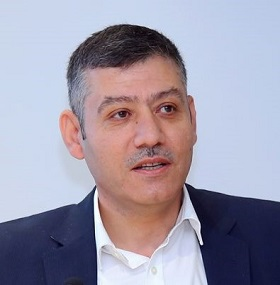
Dr. Marwan Kabalan
Syrian academic and writer and the Director of Political Studies at the Arab Centre for Research and Policy Studies (ACRPS). He is also head of the Diplomatic Studies Program at the Doha Institute for Graduate Studies.
Subscribe to the newsletter