
Ezzedine C. Fishere
A novelist, academic, and former Egyptian diplomat who served in the Egyptian government, the United Nations, and the Arab League. He held the position of Deputy Minister of Culture during the transitional government following the January 25 Revolution and served as a political advisor to the presidential campaigns of Mohamed ElBaradei (2012) and Hamdeen Sabahi (2014). Since 2016, he has been teaching at Dartmouth College. He is also a member of the editorial board of Rawaq Arabi.
One of the contemporary myths concerning the Third World is that, in those countries frequently subjugated by despotic and corrupt dictatorships, intellectuals represent a moral reserve, which, although powerless in the face of the dominant brute force, constitutes a hope, a source from which, when things begin to change, the country will be able to draw ideas, values, and persons that will allow it to promote freedom and justice. In reality, this is not how things are.”
Llosa, Mario Vargas. A Fish in the Water: A Memoir, Chapter 14.
By cultural elite, I refer to the relatively small group of individuals who shape, produce, and arbitrate the society’s norms and intellectual trends. They typically occupy influential positions in institutions such as universities, media, publishing, and the arts, but they can also be free-lancers acting in informal networks or online. Elites define what is considered valid knowledge, acceptable norms, and legitimate ideas. They also frame public discourse and interpret history, determining how society understands itself and the world. In that sense, cultural elite constitutes an authority. While it can foster creativity, critical thought, and social progress, it can also entrench myths, repression, and stagnation.
Egypt’s cultural elite draws from a mix of enduring and evolving sources. Historically rooted in Cairo’s educated middle-classes, it has long included writers, academics, artists, journalists, and politicians educated or trained in state institutions. In recent decades, new segments have joined this sphere: political activists, media figures, NGO leaders, and digital creators. Politically, the elite is a mix of leftists, liberal, and Islamists, with various degrees of nationalistic undertones.
From Nasser to Mubarak
Like its Peruvian counterpart, the Tahrir Uprising showed that Egypt’s cultural elite was not a reservoir of progress that would shine once authoritarianism collapses, but a reflection – and part – of the ruling regime and its dysfunctions. Just like the regime, it confused moral posturing with liberation and ideological rigidity with integrity. Far from being agents of renewal, Egypt’s cultural elite has been the custodians of stagnation. Broadly, this elite shared the following characteristics:
- Dogmatic, quasi-religious modes of thought. Across ideological camps – Islamist, nationalist, Marxist, or postmodern – the Egyptian elite shares a faith-based, quasi-religious attitude toward ideas. Belief takes precedence over inquiry, doctrine substitutes for reason. Even self-declared seculars or atheists reproduce the same absolutism: Marxism, postcolonialism, or critical theory function as new “regimes of truth,” complete with heresies and rituals of denunciation. Doubt, self-criticism, and above all dissent, are rejected.
- Political moralism. Elites measure the validity of action not by expected utility but by its consistency with pre-established truths of moral purity. History becomes a moral tale rather than a field of conflict. Concepts such as steadfastness and resistance acquire sacred status rather than being tools to achieve and protect interests. Compromise appears as betrayal. This produces a culture of performative heroism, and chronic political failure.
- Victimhood. The elite’s political imagination is mired into collective victimhood – the conviction that one’s group has suffered uniquely and unjustly, that its suffering is incomparable to any other, which makes this group wholly innocent, incapable of harm, while its enemies are fully culpable, incapable of good. In this narrative, Egyptians are cast as innocent victims facing omnipotent external villains, Western imperialism, Zionism, or global capitalism. This absolves the self of responsibility and disables strategic thinking. The victimhood narrative became mixed with identity to a point that makes questioning its components appear as a betrayal of the group itself.
- Statism and paternalistic dependence. Since the mid-twentieth century, the elite has embraced the state as the nation’s guardian and primary agent of progress – responsible for protecting, providing, and transforming society. Both ruling and opposition elites continue to view the state as the natural locus of initiative, politically, economically and socially – not as an institution to be limited and held accountable. The result is an elite that expects emancipation from the very authority that it purports to fight.
- Narcissism. The elite’s sense of identity is bound to Egypt’s imagined superiority, whether expressed as “leadership,” “soft power,” or a civilizational mission. Accordingly, it views foreign policy as a theatre of prestige rather than a tool to pursue interests. It is a compensatory myth that masks domestic failure: the more Egypt loses real influence, the more its elites cling to fantasies of superiority. And because the myth is divorced from reality, it locks Egypt’s relations with the world in a logic of perpetual failure: setting out unachievable goals and drawing the ire of what would have been Egypt’s partners.
- Essentialist worldview. The elite largely divides the world into a virtuous East and a predatory West. The former, pure and innocent, is imagined as betrayed by the latter’s conspiracies – the creation of Israel being the quintessential symbol of this trauma. Modern institutions, globalization, and even universal human rights are thus reinterpreted as Western tools of domination. This essentialism immunizes the elite against integration in the world, feed fundamentalistic narratives, and sustains the politics of resentment.
- Tribal politics. Public life remains governed by loyalty networks rather than institutions and rules. Loyalty is prized above competence, dissent is read as treachery, and exchange of benefits is the main currency of interactions. This reinforces an in-group out-group dynamic, together with its exclusionary rhetoric – from “rooting out the remnants” of the old regime to purging Islamists or “Arab Zionists.” Purity tests, usually a display of who belongs to which network, replace debate. Accusations of betrayal – of the revolution, the martyrs, or the national cause – are often deployed as weapons in this tribal war.
- Conservatism. Despite their ideological diversity, including a partial commitment to artistic and personal freedoms, the elite generally champion decorum over creativity, compliance with its codes over critical thought. By policing the boundaries of expression – through network censorship and sanctions – they sustain their role as guardians of collective virtue. This conservatism constrains intellectual renewal as much as ideas of social, economic or political reform.
- Performative politics. Politics among Egypt’s elites is primarily theatrical. Statements, moral outrage, and symbolic gestures substitute for policy or institutional work. Even revolutionary energies devolve into protest rituals that reaffirm moral purity without producing an imagination for governance. The result is an opposition that articulates noble goals – social justice, rule of law, development – without operative programs to translate them.
- Ignorance. Egyptian elite has long been intellectually underdeveloped. Since the late nineteenth century, it has thrived on journalism and an oral culture rather than in scholarship or scientific production, leaving a thin intellectual legacy. Today, the same superficiality endures, amplified by a social media culture that rewards slogans over knowledge. Their grip on cultural institutions – education, media, publishing – ensures that mediocrity reproduces itself, safeguarding tribalism over merit and control over innovation.
These deep-seated flaws ebbed and flowed from Nasser’s era through Sadat’s. There were always brilliant outliers who sought to transcend these pathologies, at times confronting them directly, at others avoiding them as best they could. But the dynamics that produced the elite and conditioned its socialization ensure the reproduction of these pathologies. They ultimately made the elite unfit to lead when the authoritarian grip loosened in 2011. Trapped in their tribal and performative politics, they mistook protest for strategy and moral indignation for vision. When history offered a fleeting moment of possibility, they lacked the imagination, skill and discipline to guide society toward democratization. Instead of renewal, they reproduced the same hierarchies, conspiracies, and zero-sum logic that had long crippled Egypt’s political life.
The Fleeting Promise of a New Culture (2011–2020)
Between 2011 and 2020, I believed that a new culture was emerging in Egypt – one that could, over time, lead society beyond the paralysis of its elites. I described this transformation in a series of articles in Mada Masr, the last of which appeared on September 2, 2018. It seemed, then, that a new generation, politically conscious but weary of ideological dogma, was beginning to articulate a different intellectual vocabulary. This emerging culture was still putative, fragmented, and incomplete. None of its features had yet matured into a coherent worldview or an organized movement; it was more a set of new directions than a doctrine, a group of scattered elements rather than a full-fledged ideology. Still, there were unmistakable signs of change, visible in the following areas.
First, a universalist view of the world. The Tahrir generation broke with the old elite’s obsession with authenticity and cultural exceptionalism. Its members articulated a more universalist outlook grounded in shared human values rather than inherited identities. They spoke not of East and West, or of Egypt’s eternal struggle with Israel, but of dignity, freedom, and justice as universal aspirations. Their gaze turned inward – to Egypt itself – seeking not enemies abroad but accountability and reform at home. In doing so, they redefined patriotism as the pursuit of a just and functional society, not as a defensive posture against imagined external threats.
Consistent with this universalist worldview, they articulated aspects of the modern values of equality, freedom, and individual responsibility. Their notion of freedom extended from the political to the social and personal: gender relations, sexual and religious freedoms, and the rejection of inherited hierarchies that governed both public and private life. They were less accepting of their status as subjects, passively obeying authority, but rather demanded to be recognized as citizens, entitled to rights and accountable for their choices.
Third, this generation showed an emerging sense of agency – a conviction that society’s fate was not solely determined by the state or by shaped by historical grievances. They rejected the fatalism and victimhood that had long afflicted Egyptian political culture. In its place came a belief in self-determination, in the possibility of shaping collective life through initiative, mobilization and action rather than performative claims and statements.
Fourth, they exhibited a higher degree of pragmatism. Instead of judging ideas by their conformity to ancestral or ideological references – religious texts, nationalist myths, or revolutionary slogans – they evaluated them by their consequences. In this, they departed from the elite’s moral absolutism and rediscovered the value of incremental improvement, compromise, and experimentation. Consistently, this generation tended to favor interest over identity. They were less preoccupied with defining who they were – religiously, nationally, or culturally – and more concerned with what they wanted: effective institutions, decent services, and fair opportunity. This shift from moral belonging to civic interest marked a quiet but profound rupture with the cultural logic of Egypt’s twentieth-century politics.
Finally, they displayed a spirit of skepticism and critical inquiry. Questioning inherited norms, social taboos, and intellectual authorities became part of their everyday discourse, especially in online communities, independent art spaces, and volunteer initiatives. It was an intellectual modesty that prized open discussion over grand theory, and authenticity over conformity.
These traits were neither universal nor complete. Few individuals embodied all of them; many displayed some while retaining vestiges of older mentalities. Freedom advocates could still exhibit chauvinism or toxic masculinity, and champions of equality could cling to inherited hierarchies. Like any deep cultural transformation, this one was messy, uneven, and in flux. The question was not whether change was happening, but where it would lead – and whether it could coalesce into a coherent new ethos before being reabsorbed by the old order.
Within this emerging fluid cultural wave, there were those who entered politics directly after 2011 – activists, organizers, and young party members who briefly occupied the public stage before being crushed by repression and disillusionment. There was also a larger group, politically unengaged but sharing the same values. This latter group occasionally joined protests, volunteered during elections, or expressed enthusiasm for democratic change, but soon retreated into private life as the old order reasserted itself.
The question was whether either group could translate this cultural awakening into political action. Could those engaged in politics escape the patronage of the old opposition, articulate an autonomous vision, and lead political groupings – or would they fall prey to the control of the old guard? And would the second group – the quiet, disenchanted majority who share their new culture – find the will to step forward and defend their unrepresented interests, or would they retreat further into the private sphere?
The Triumph of the Old
It is now evident that the old elite has triumphed – not only through power, but through thought and discourse. Its worldview has prevailed, reasserting itself in media, art, and political discourse. The younger generation that once gestured toward a new civic culture has either adapted its ideas to the inherited templates or withdrawn into private life. Those who entered public life found themselves compelled to speak in the old idioms – of authenticity, victimhood, and nationalism – until they too became indistinguishable from those they had hoped to replace. Those who stayed silent were gradually folded into the collective fatigue that defines Egyptian public life.
The promise of Egypt’s 2011 awakening has evaporated. What briefly seemed like the emergence of a new cultural sensibility – critical, self-aware, and pragmatic – has been absorbed and neutralized by the old intellectual and moral order. The cultural elite that might have led a process of renewal has instead been reabsorbed into the logic it once seemed to escape. This is how Egypt reproduced its stagnation: through assimilation, not annihilation. The state does not destroy its critics; it domesticates them. Likewise, the old elite does not silence new voices by censorship alone but by metabolizing dissent, reshaping it in its own image. The result is a culture that prizes repetition over invention, and imitation over critical and free thought. Every attempt at renewal – whether political or intellectual – is eventually absorbed into the very structures it sought to challenge.
Whatever remained of that promise was steamrolled into the old mold by Al-Aqsa Deluge. In Egyptian political culture, Israel has long served as a crucible for historical victimhood and a vessel for displaced frustration. It functions as a magnet for nationalist emotion and performative outrage, a ready symbol through which regimes and opposition alike channel resentment, rally loyalty, and affirm purpose. This is part of the post 1952 habit of externalizing failure and attributing domestic decay to a hostile “other” – the “Colonial West” and its favorite child, Israel. As such, it became both a unifying cause and a convenient diversion, a means of galvanizing collective feeling while deflecting attention from internal dysfunction. In this sense, Israel has operated less as a political reality than as a substitute for politics itself: a symbolic battlefield on which Egyptians act out their sense of victimhood, virtue, and deferred agency.
The Tahrir generation seemed to have escaped that trap, for a while. Although aware of the Israeli–Palestinian conflict, and including activists previously engaged with it, the Tahrir Uprising deliberately pushed that issue to the background, turning its focus instead to Egypt’s own dysfunctions of state, economy, society, and culture. This changed over time: with the restoration of the old regime, the traditional fixation on Palestine resurfaced and gradually became a central focus of political and moral discourse. Al-Aqsa Deluge completed what Egypt’s military regime, with its repression and disillusionment, had begun: pulled the Tahrir generation back into the ideological mold of the old elite. Faced with Israel’s devastating war in Gaza, many who had once rejected binary thinking and performative nationalism found themselves drawn back to the familiar grammar of outrage and innocence, virtue and betrayal, standing on the Lawyers’ Syndicate staircase, shouting Down with All the Agents and Traitors. In the emotional intensity of the moment, the universalist ethos that had once defined this generation gave way to the inherited reflexes of historical victimhood and culpability.
Activists who had long championed human rights excused terrorism as legitimate “resistance”, advocated “liberation by all means necessary”, and embraced the idea that “there is no alternative”. Secularists who once battled Islamists for the principle of civic politics suddenly rallied behind Islamist movements in the name of anti-imperial solidarity and intersectionality. Those who had preached integration into a global world retreated to the comforting rhetoric of Western conspiracies, double-standards, and cultural imperialism. The moral clarity that once guided their advocacy dissolved into the same reactive, tribal logic they had once resisted. The promise of renewal was thus steamrolled back into the constraining frame of the past.
The restauration of the old regime is now complete, not only through tanks, prisons and rigged elections, but also through the resurrection of the old cultural habits, with its rhetoric, symbols and signifiers.
Egypt’s only conceivable path to renewal lies in a moral and intellectual rupture within its elite, a readiness among its members to confront the ghosts of the past that haunt society. Yet such a mindset remains painfully marginal, confined to scattered individuals rather than a self-conscious movement. The tragedy is that Egypt’s principal engines of renewal – educational and socialization institutions – are themselves mechanisms that preserve stagnation. The deeper tragedy, therefore, is not that Egypt lacks talent – it does not – but that it lacks an elite capable of transcending its own condition. Its thinkers, artists, and intellectuals are part of the authoritarian dysfunctional regime, in charge of guarding its stagnant political culture – not agents of change and renewal. In a sense, Egypt’s cultural elite are the true heirs of its Hery Sheshtas, the ancient priests who embalmed the bodies of the dead with reverence but drained them of life.
Published on : 19/02/2026
This paper was prepared and presented as part of the Regional Forum of the Human Rights Movement, organized by the Cairo Institute for Human Rights Studies (CIHRS), in its 28th session, November 2025.
Share this Post
Any views expressed in this publication are the views of the authors and not necessarily the views of the Cairo Institute for Human Rights Studies.
You may also like
Political Dominance – When Economic Performance Takes a Back Seat
Ishac Diwan
Arab Limited Access Orders: Can They be Reformed?
Dr. Robert Springborg
Liberal Questions about the Current Arab Reality
Hazem Saghieh
Perceptions of Palestinian Politics and Struggle: The Case of Al-Aqsa Flood and the Israeli War of Genocide
Majed Kayali
Political Transition in Post-Assad Syria: An Analysis of Discourses
Dr. Sari Hanafi
Who Decides the Foundations of the New Syria? Who Is Sovereign?
Yasin Alhaj Saleh
Which New Middle East? The End of the Nation-State and the Federal Option
Morris Ayek
The New Balance of Power in the Middle East and its Implications for the Nation-State in the Mashreq
Dr. Marwan Kabalan
28th Regional Forum of the Human Rights Movement
Toward New Paths to Reform
Paris: 22 – 23 November 2025
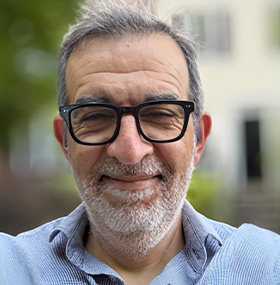
Ezzedine C. Fishere
A novelist, academic, and former Egyptian diplomat who served in the Egyptian government, the United Nations, and the Arab League. He held the position of Deputy Minister of Culture during the transitional government following the January 25 Revolution and served as a political advisor to the presidential campaigns of Mohamed ElBaradei (2012) and Hamdeen Sabahi (2014). Since 2016, he has been teaching at Dartmouth College. He is also a member of the editorial board of Rawaq Arabi.
Subscribe to the newsletter